


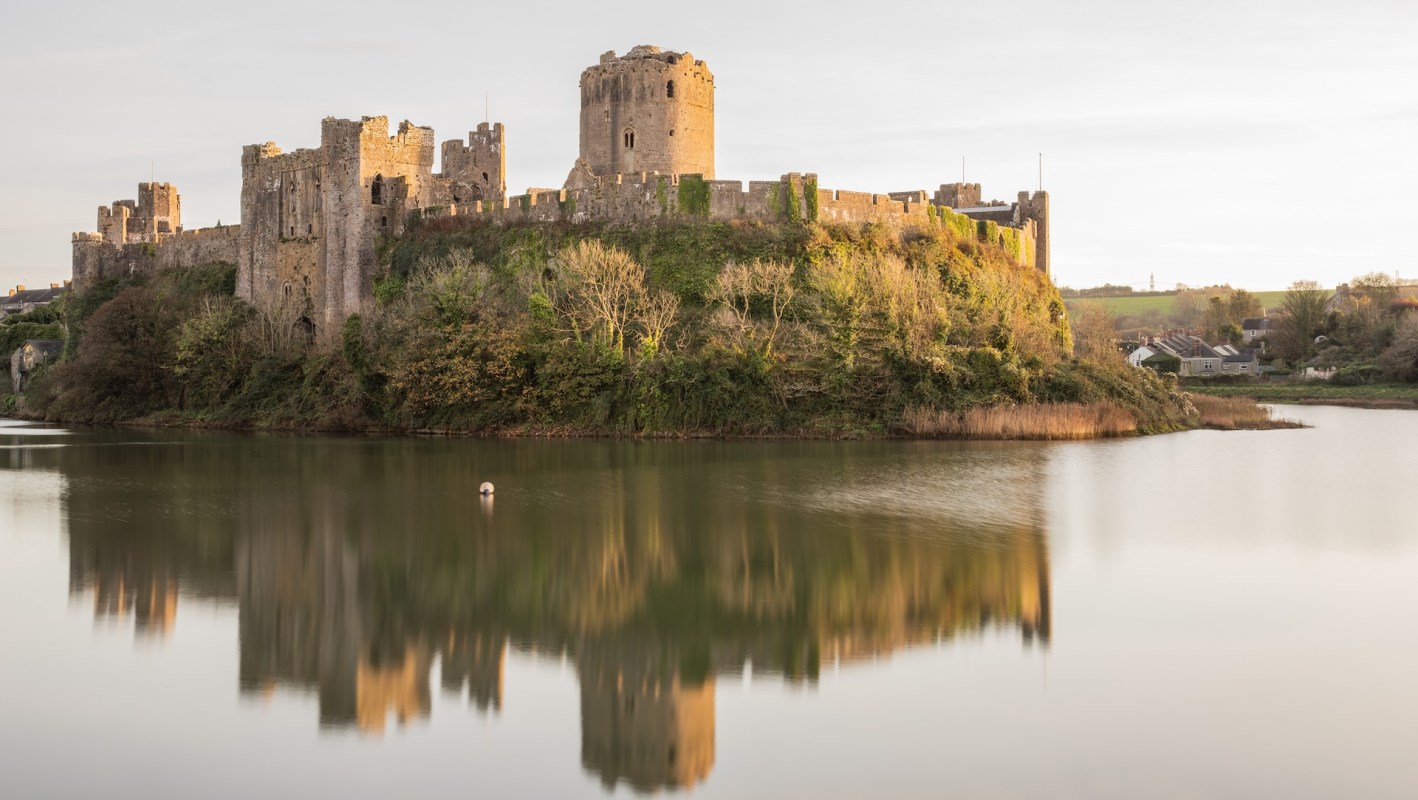
Hippos don't make an appearance in traditional British folklore, but a remarkable discovery beneath an 11th-century castle has revealed they were part of the United Kingdom's prehistoric past.
Channel 4 News (@channel4news) shared buzzworthy images from an archaeological dig at Wogan Cavern, a cave under Pembroke Castle in Pembrokeshire.
The University of Aberdeen's Rob Dinnis headed the initial excavation, which uncovered "extremely rare" traces of early humans and animals in Wales. The findings included 120,000-year-old hippopotamus bones, a molar from a woolly rhino, and stone tools.
"There is no other site like it in Britain — it is a once‑in‑a‑lifetime discovery," Dinnis said in a university press release. "With this new project we can learn a great deal about our early prehistoric forebears, about how they lived and what their worlds looked like."
The findings were so unexpected that the BBC declared they could "rewrite Britain's prehistory."
In addition to triggering a paradigm shift, a larger-scale dig could lead to practical applications for today. As the researchers noted, they expect their work to deepen our understanding of how climate shifts and environmental changes affected Earth's early inhabitants. That, in turn, could help us better predict future risks and prepare for them. Excavations will resume in May.
TCD Picks » Quince Spotlight
💡These best-sellers from Quince deliver affordable, sustainable luxury for all




"Wogan Cavern provides a unique chance to use all the scientific techniques now available to archaeologists," Kate Britton, a specialist in science-based archaeology at the University of Aberdeen, said in the press release. "Because the bones are well preserved, we can learn a lot about past environments and ecosystems, and do high-resolution scientific dating."
The discovery sparked fascination on Instagram.
"This will be very interesting for years," one person remarked on a BBC Wales News post.
"Super cool! Amazing job by everyone involved!" another enthused.
A third person thought Pembroke Castle's royal history could have explained the animal findings, though the Tudor dynasty, beginning in 1485, is significantly closer to modern history than prehistory.
"Wow how weird! Menagerie?" they wondered.

Get TCD's free newsletters for easy tips, smart advice, and a chance to earn $5,000 toward home upgrades. To see more stories like this one, change your Google preferences here.







