


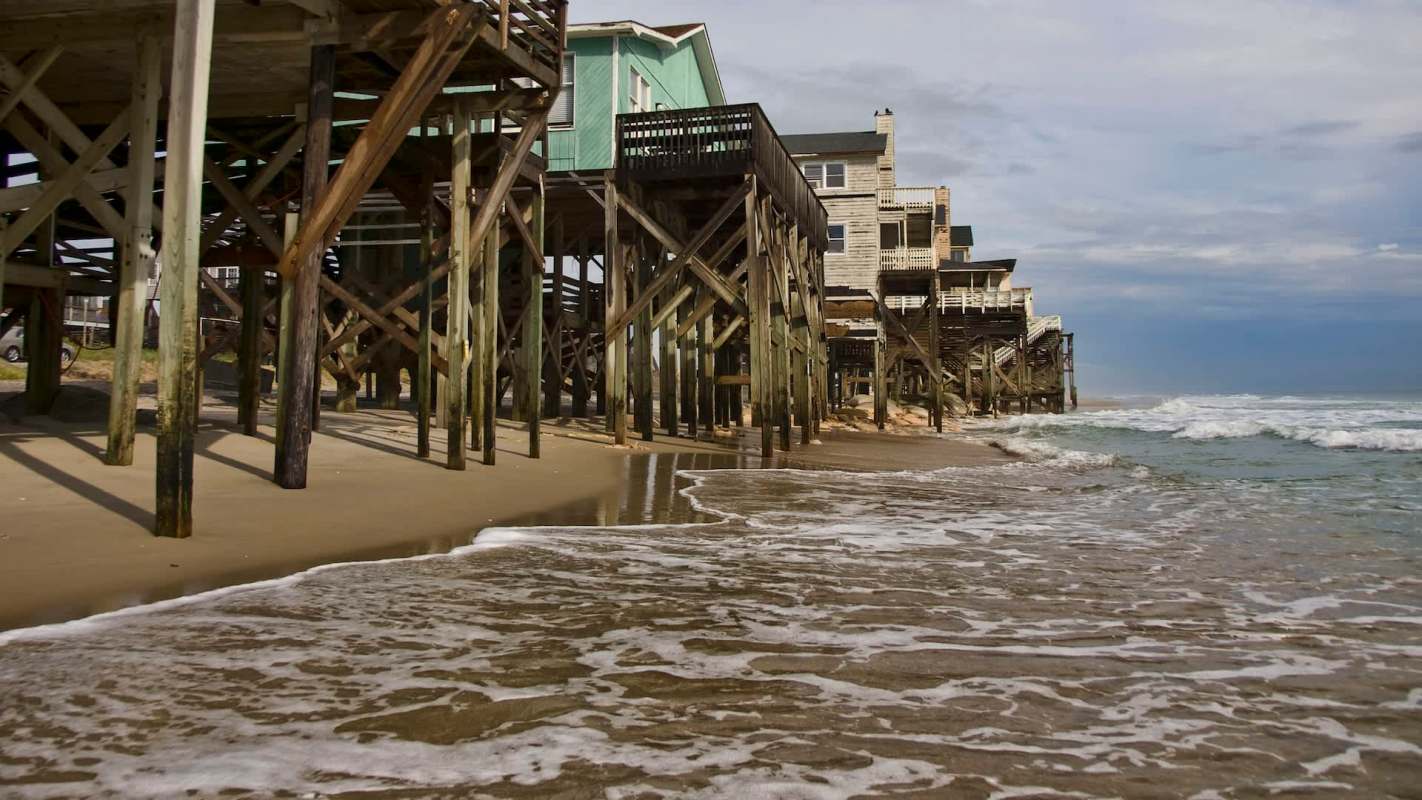
The Outer Banks are barrier islands in North Carolina that attract millions of vacationers every year, but island time is speeding up because eventually there may be no islands left.
In a YouTube video for EcoBits (@EcoBitsOfficial), Justin Pack broke down why island homes are falling into the ocean, and the answer is more complicated than initially meets the eye.
First, the Outer Banks' beachfront homes weren't always so close to the beach. While many may think of land as static, its relationship with its surroundings is dynamic, even if change takes time to see. In the case of these barrier islands, natural migration makes them self-sustaining.
However, humanmade infrastructure has disrupted the oceanic cycle that enables island migration. Now, the Outer Banks are experiencing "coastal squeeze." Instead of slowly shifting position when they lose sand on one side and gain it on the other, they are narrowing on both sides.
Another factor of our own making is exacerbating the situation: rising global temperatures.
"This is wreaking havoc all over the world, whether you're talking about floods, droughts, fires, or, in this case, accelerated erosion rates," Pack explained.
TCD Picks » Quince Spotlight
💡These best-sellers from Quince deliver affordable, sustainable luxury for all




Add in the facts that sea levels are rising and the islands sit at the intersection of two major ocean currents, and you have the perfect recipe for more destructive storm surges.
"I've dealt a lot with watching the weather. It's definitely become a lot more severe and more frequent," Esben Boxer, a ship captain and Outer Banks resident, told EcoBits.
Replenishing beaches with sand has proved to be an effective mitigation measure for erosion, and one local went so far as to physically move his entire home to escape worsening storms.
Still, these are expensive and inexact solutions.
"Turns out you can't pay off nature. Shocker," a Reddit user reflected in a r/NorthCarolina thread about the Outer Banks' ongoing issues with beach erosion.
Living shorelines may strike a better balance between sustainability and public benefit by acting as buffers and improving water quality, though they can't totally protect against ocean waves.
"It really finds a balance between a very hard engineering solution and something that's a little softer that can also serve as habitat and can be a win-win for the environment and for the society living in these areas," National Park Service regional superintendent David Hallac told EcoBits.

Get TCD's free newsletters for easy tips, smart advice, and a chance to earn $5,000 toward home upgrades. To see more stories like this one, change your Google preferences here.







