


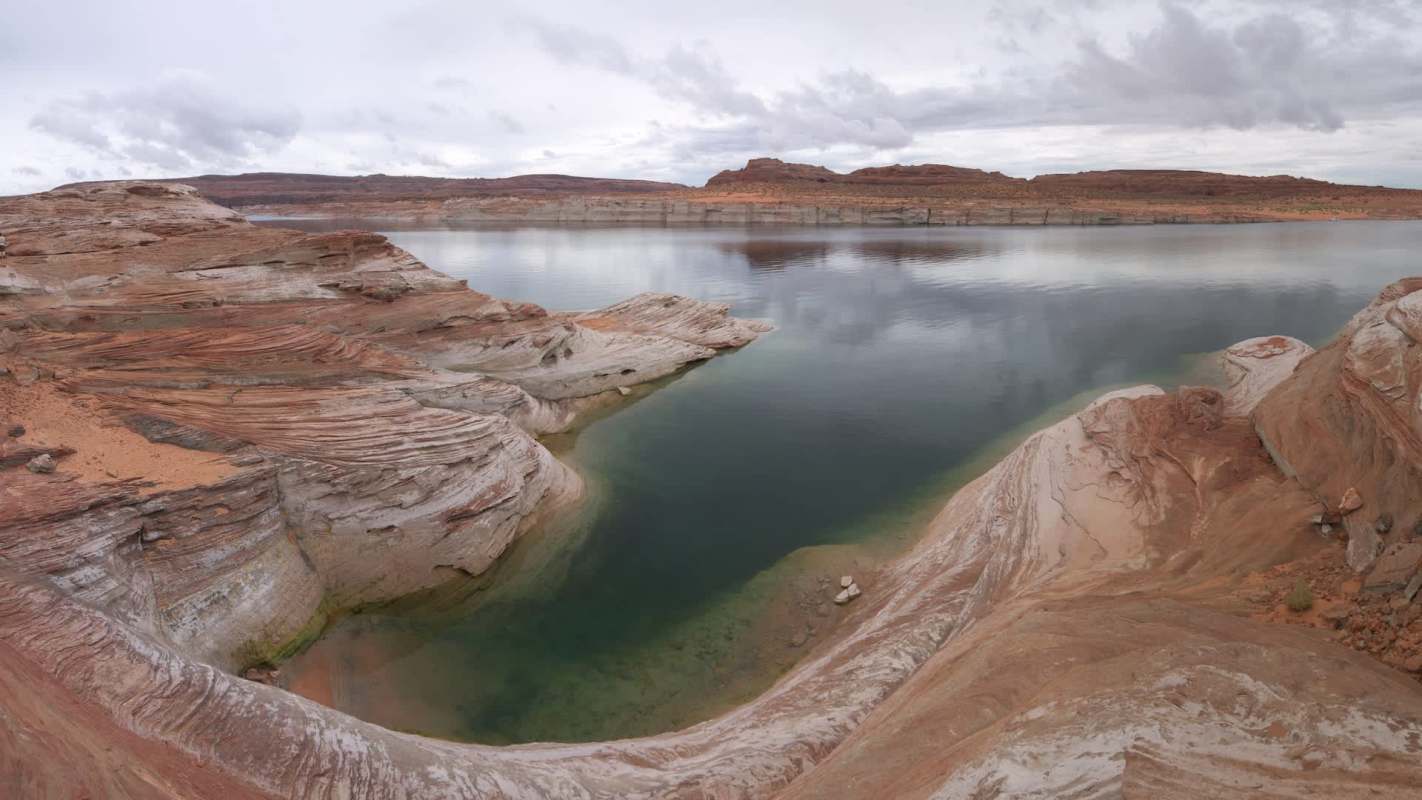
Lake Powell is reaching the "break glass in case of emergency" stage. Now, Upper Basin states of the Colorado River are hesitantly approving desperate measures to rush aid to the struggling lake.
What's happening?
The Salt Lake Tribune reported on a newly approved plan to send up to 1 million acre-feet of water from Flaming Gorge to Lake Powell.
The Upper Colorado River Commission and Bureau of Reclamation unveiled the drought response operation that sends relief as Lake Powell approaches levels that could prevent it from generating hydroelectric power.
"The drought is just absolutely crippling across our entire state and across the West," Gene Shawcroft, Utah's Colorado River negotiator, said shortly before the decision, per the Tribune.
The Flaming Gorge Dam is located on the border of Wyoming and Utah. The impending drawdown could adversely affect the livelihoods of communities that depend on the dam.
"We recognize that what we are approving today will have significant negative impacts on our water resources, our local economies, and recreation, both this year and for years to come," said Brandon Gebhart, Wyoming's Colorado River negotiator, per the Tribune.
TCD Picks » Quince Spotlight
💡These best-sellers from Quince deliver affordable, sustainable luxury for all




On those lines, recreation areas on both the Utah and Wyoming side will take a huge hit, according to Gebhart and Amy Haas, executive director of the Colorado River Authority of Utah.
"Flaming Gorge is their livelihood," Haas told the Tribune of Daggett County residents in the recreation economy.
Why are emergency measures for Lake Powell concerning?
These painful moves may alleviate the looming power crisis at Lake Powell and are the sort of sacrifices officials are making to keep power on and allow releases to downstream states.
While the Flaming Gorge measure is paired with fewer releases from Powell, there is real concern that both moves won't be sufficient to keep Glen Canyon Dam at the required 3,490 feet of depth. That is, even if it's projected to be enough.
"I wish I could say I was confident in that forecast," Haas told the Tribune. "I'm not because of the changes that we've seen over the last couple of months."
Amid a major drought, record heat in March, and low snowpack in the winter, Lake Powell's levels are becoming an existential crisis affecting all seven basin states.
What's being done about Lake Powell long-term?
With persistent drought a reality, the states must reach an agreement on how to handle the situation long-term.
There are millions of residents who depend on the reservoir's power and irrigation. The federal government is trying to facilitate discussions, but as Flaming Gorge demonstrated, there are no easy answers.
The government might need to make drastic moves, such as cutting off centuries-old water rights and halting operations for longtime farmers and ranchers.

Get TCD's free newsletters for easy tips, smart advice, and a chance to earn $5,000 toward home upgrades. To see more stories like this one, change your Google preferences here.







