


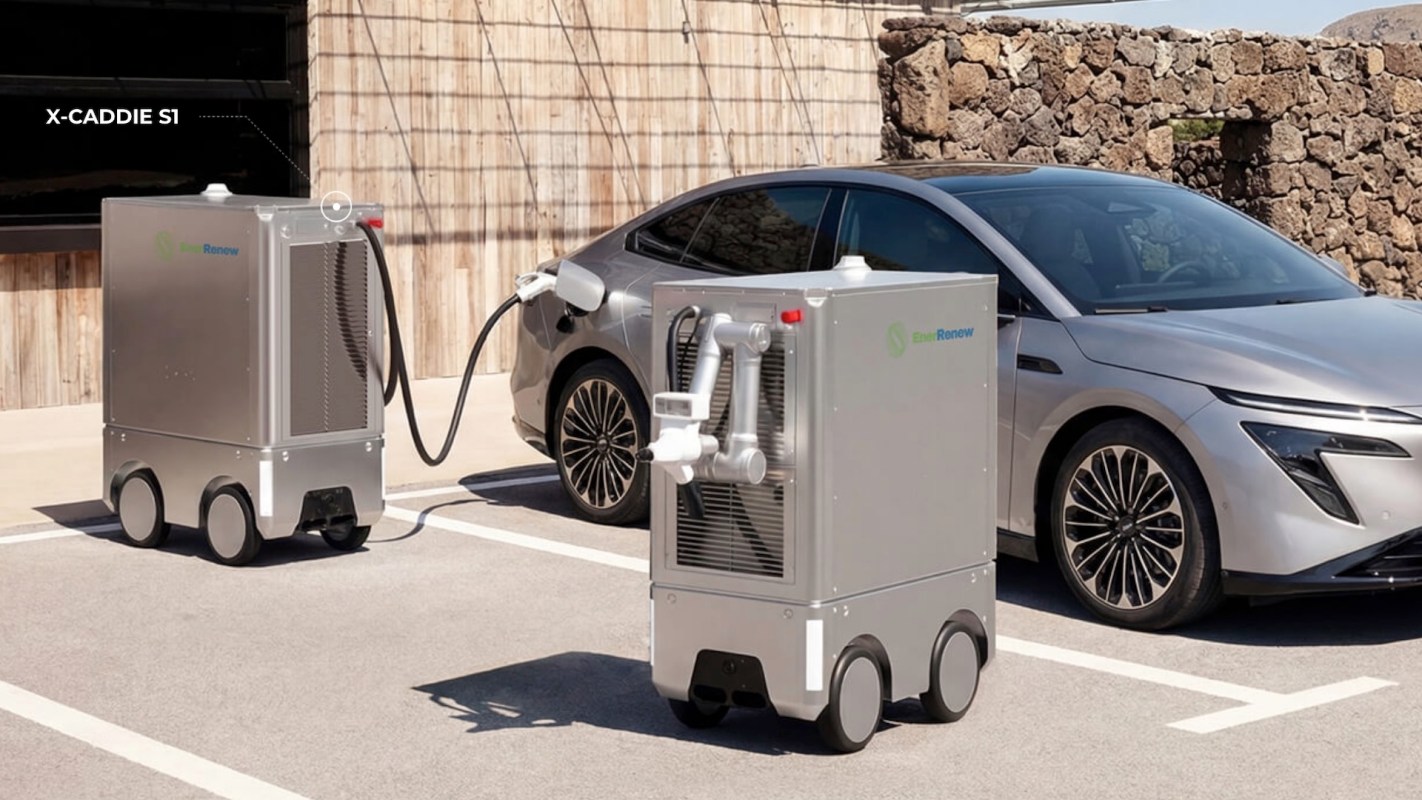
EV driving just got even simpler for residents of Treasure Island in San Francisco, thanks to a fridge-sized self-driving robot designed to drive to, plug into, and charge cars.
According to a report from the San Francisco Chronicle, the machine, called "X-Caddie," was built by energy technology company EneRenew.
The robot is designed to quietly glide through parking lots using sensors and low-noise motors. Equipped with a charging arm and onboard battery pack, it eliminates many of the hassles associated with public charging.
EV charging is already more convenient than gas stations thanks to options like Level 2 at-home chargers from providers such as Qmerit. While many drivers know charging is typically cheaper than fuel, fewer realize just how convenient it can be when you can plug in at home.
This next-generation robot is one of several efforts by charging companies to make public charging even easier for drivers. It's part of a pilot program launched by EneRenew in late March, aimed at delivering charging solutions for densely populated urban areas.
The goal is for drivers to call over a robot to their parked car via an app. Once summoned, the robot autonomously drives to the location, extends its charging arm, and plugs into the EV port without any human intervention.
Grady Zhu, chief technology officer at EneRenew, explained that "one of the main problems" with fixed EV charging is the difficult approval process. Fast chargers put a difficult strain on utility companies, which have to add infrastructure capacity to support the chargers.
The X-Caddie solves this issue with its highly dense battery built into its framework.
Save $10,000 on solar panels without even sharing your phone number Want to go solar but not sure who to trust? EnergySage has your back with free and transparent quotes from fully vetted providers in your area. To get started, just answer a few questions about your home — no phone number required. Within a day or two, EnergySage will email you the best options for your needs, and their expert advisers can help you compare quotes and pick a winner. Solar panels can save you more than $50k over their 25-year lifespan, and EnergySage can help you save as much as $10k on installation. Which begs the question — isn't that worth an email or two? |

Plus, depending on the area, EV charging can involve unpredictable and sometimes long wait times. In small communities like Treasure Island, for instance, charging infrastructure still hasn't been built out at scale.
"We have a solution," Zhu said, per the Chronicle, referencing the X-Caddies.
The first X-Caddie prototype was built two years ago, and the company plans to launch 10 pilot sites in the next few months.
While solutions like this and expanding charging networks can make public charging easier, the most convenient way to power up an EV is usually through an at-home charger.
If you're considering upgrading, connect with the experts at Qmerit to get free estimates for Level 2 charger installations.
For homeowners with solar, charging at home makes even more sense. By using the low-cost energy generated by their panels, drivers can charge their cars at little to no cost.
To see how solar panels could lower your energy bills or help you rely less on your utility provider, connect with the experts at EnergySage. Its tools make it easy to compare quotes, find vetted installers, and potentially save up to $10,000 on the cost of going solar.

Get TCD's free newsletters for easy tips, smart advice, and a chance to earn $5,000 toward home upgrades. To see more stories like this one, change your Google preferences here.






