


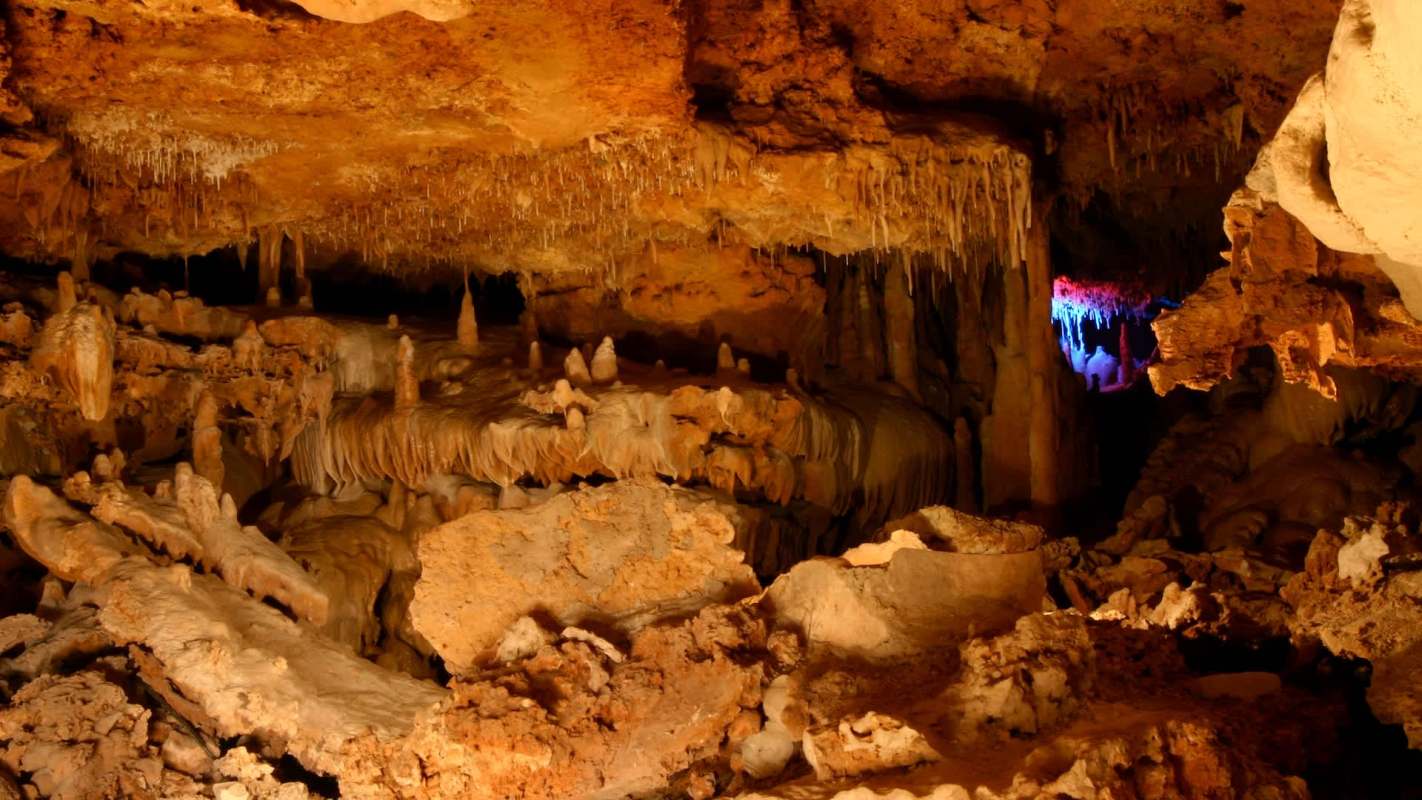
An Ice Age cave discovery in Central Texas has provided stunning evidence that giant creatures once roamed the region.
Paleontologist John Moretti found ancient animal fossils while snorkeling in an underground stream, located at Bender's Cave.
The volume of bones he found was overwhelming, including giant tortoise shell fragments and remains from a huge armadillo cousin that was the size of a lion.
"It's a new window into the past and into a landscape, environment, and animal community that we haven't observed in this part of Texas before," Moretti said in a news release.
He and local caver John Young explored the area in 2023 and 2024. Their findings were published in the journal Quaternary Research.
As researchers from the University of Texas at Austin detailed, the animals lived during a warm period 100,000 years ago during the last Ice Age. Remains of a giant ground sloth, saber-tooth cats, camels, and mastodons were also found.
TCD Picks » Quince Spotlight
💡These best-sellers from Quince deliver affordable, sustainable luxury for all




"It was just bones all over the floor," Moretti added.
It's evidence of how Earth's climate has changed over millennia. The bones are thought to have fallen into the cave during ancient floods.
Some of the animals were forest dwellers, while the giant tortoise would have required warm temperatures. Both conditions may have existed in Central Texas during the interglacial time, with large grasslands in the region when it was cooler, according to the report.
That part of the country is now a humid subtropical climate with long, hot summers and short, mild winters, per the National Weather Service.
|
Which of these savings plans for rooftop solar panels would be most appealing for you?
Click your choice to see results and earn rewards to spend on home upgrades. |
 Save $1,000 this year 💸
 Shorter warm periods during the Ice Age created "boom-and-bust" times for larger mammals in the Arctic, according to the University of Alaska Fairbanks and the Natural Museum of Utah, perhaps explaining the creatures' unusual size.
In Texas, cave explorers think the bones they found were swept underground together around the same time, though carbon dating was tough to complete. Similar fossils from the interglacial period have been found in other parts of Texas, suggesting these remains are contemporary.
"Some of the fossils that John has come across are species that we didn't think would occur in this part of Texas," said St. Edwards University assistant professor David Ledesma, who wasn't involved with the study, in the UT report.
"That we're still learning new things and finding new things is quite exciting," he added.

Get TCD's free newsletters for easy tips, smart advice, and a chance to earn $5,000 toward home upgrades. To see more stories like this one, change your Google preferences here.







