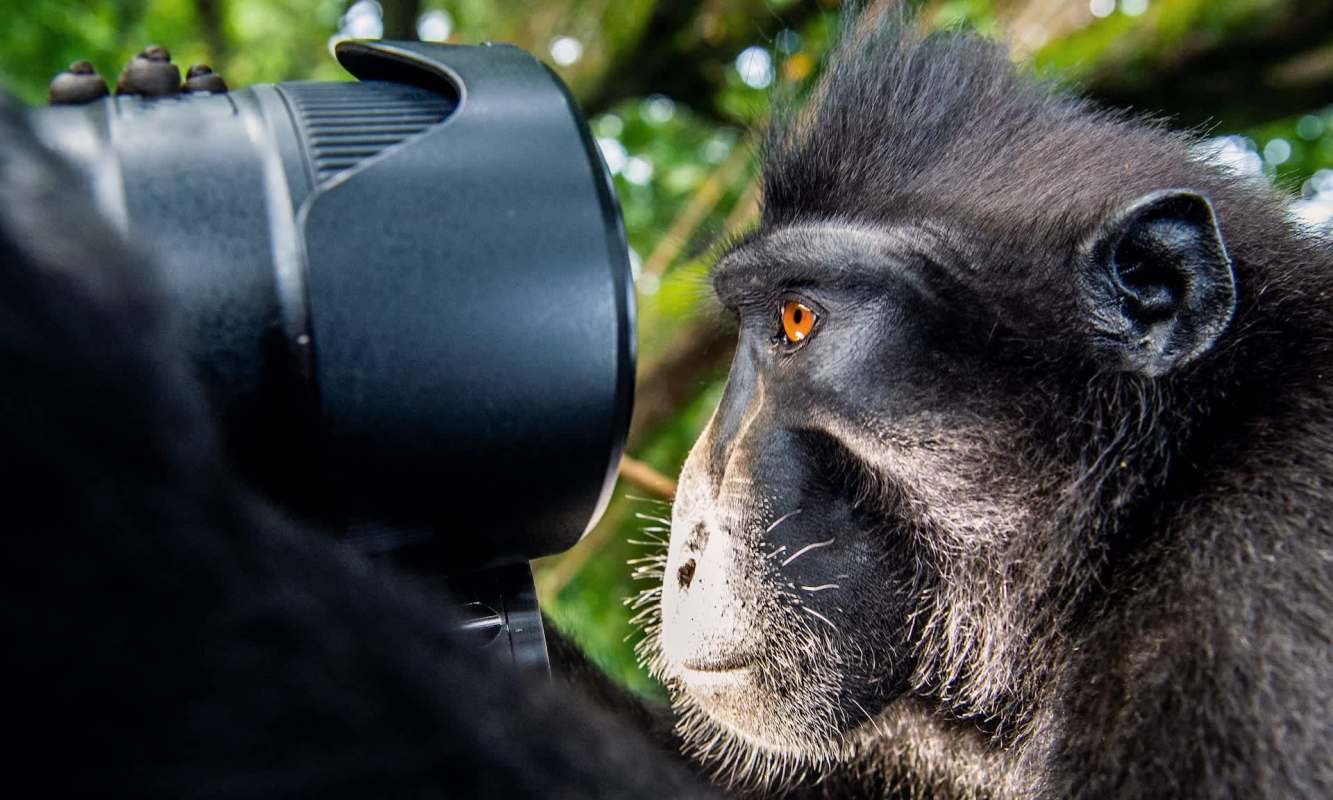
What does a selfie taken by a monkey in 2011 have to do with the videos, photos, and music created using today's artificial intelligence tools?
The answer — that the works in question were not created by humans — could have enormous ramifications for the future of intellectual property rights.
According to the BBC, David Slater, a photographer, captured the iconic monkey selfie image by leaving his camera and tripod unattended and allowing a group of macaques to explore it themselves. In the process, one of the monkeys hit the shutter release button, creating the now-famous photo.
For years after, Slater was embroiled in legal controversies over whether he owned the rights to the image. Ultimately, the court system ruled that he did not hold a copyright to the photo because he had not created it himself.
Now, roughly 15 years after a monkey in the Indonesian jungle inadvertently took a selfie, the legal issues surrounding the image provide a useful precedent for determining which rights a human can hold for a work created by AI.
"It was kind of the biggest public conversation piece on this topic," said Ryan Abbott, an intellectual property lawyer, per the BBC. "At the time it was very much about animal rights. But it could have been a conversation about AI."
TCD Picks » Quince Spotlight
💡These best-sellers from Quince deliver affordable, sustainable luxury for all




Already, courts have weighed in on the question of AI-produced works. For example, in March, the U.S. Supreme Court declined to hear a case brought by a man seeking copyright protection for an AI-generated image.
By turning down the case, the court let stand lower court rulings that the work was not covered by copyright law.
At its core, courts' reasoning with regard to AI has been the same as with the monkey selfie: For a work to receive copyright protection, it must be created by a human.
This legal precedent is likely to have a profound impact on the future of not only AI-generated works but also creative works in general.
If humans can receive copyright protections but AI works cannot, it might motivate industries from film to music to publishing to favor human-created works over AI ones.
|
Which of these savings plans for rooftop solar panels would be most appealing for you?
Click your choice to see results and earn rewards to spend on home upgrades. |
 Save $1,000 this year 💸
Get TCD's free newsletters for easy tips, smart advice, and a chance to earn $5,000 toward home upgrades. To see more stories like this one, change your Google preferences here.