


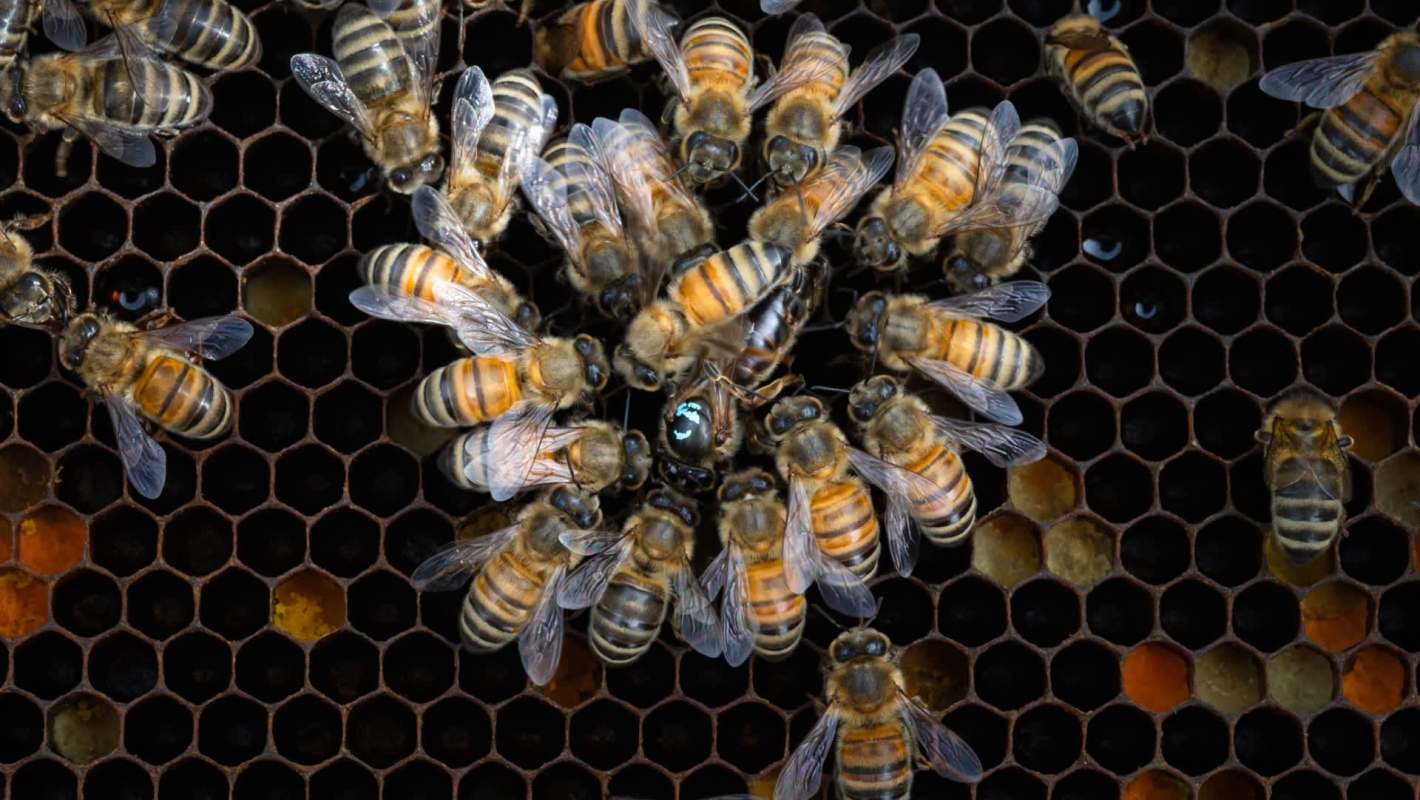
Scientists have found that a kind of "forever chemical" can accumulate in honey and honeybees, according to the University of New England in Australia.
What's happening?
The study found that an environmental pollutant known as perfluorooctanesulfonate, or PFOS, can build up in honey. And you don't want this mouthful of a substance swirling around in your tea.
PFOS is a type of PFAS, which are also known as "forever chemicals." They take a long time to break down and are linked to health issues and environmental harm.
While the PFOS levels in honeybees were just below lethal levels, researchers found that chronic exposure remained harmful. PFOS altered how some key proteins involved in cellular functions in honeybees were expressed.
Dr. Carolyn Sonter, who led the study under the supervision of four UNE professors, said this change was visible in the bees' body tissues. Juvenile bees with chronic PFOS exposure weighed less than bees that weren't exposed to PFOS.
"A lower body weight indicates a smaller bee with smaller glands, including the hypopharyngeal gland, which produces royal jelly to feed the next generation of bees," said Dr. Sonter in an article from UNE.
TCD Picks » Quince Spotlight
💡These best-sellers from Quince deliver affordable, sustainable luxury for all




As the press release stated, if royal jelly isn't up to standards, bee larvae lose out on crucial nutrients. And those effects could ripple out, negatively impacting other beings, including humans.
Why is PFOS concerning?
"Any threat to bees threatens food security," said Dr. Sonter.
Our World in Data stated that, while not every crop is dependent on pollinators, many nutrient-rich crops are. Bees and other pollinators, like bats and butterflies, boost the production of crops like fruits, nuts, and cocoa beans.
To be clear, this was an experiment where researchers exposed bees to PFOS. Researchers didn't observe PFOS in the hives before adding it themselves.
|
Which of these savings plans for rooftop solar panels would be most appealing for you?
Click your choice to see results and earn rewards to spend on home upgrades. |
 Save $1,000 this year 💸
 But if PFOS does make its way into more bees, it could contribute to people having less diverse diets.
The press release also explained that bees can be exposed to PFOS through, among other things, pollen from plants grown in contaminated soil or water.
How are people supporting honey and honeybees?
Dr. Sonter said in the UNE article that avoiding crop protection products that contain PFAS can reduce bees' exposure. Additional research can also help create guidance for beekeepers and gardeners to protect these incredible creatures.
"I'm excited to continue working with UNE's world-class research groups … to continue finding answers to help secure our environment for future generations," Dr. Sonter said.
If you want to help bees and other pollinators, rewilding even a small part of your outdoor space can help. Doing so can provide more food sources to pollinators and could save you some money in the long run.

Get TCD's free newsletters for easy tips to save more, waste less, and make smarter choices — and earn up to $5,000 toward clean upgrades in TCD's exclusive Rewards Club.







