


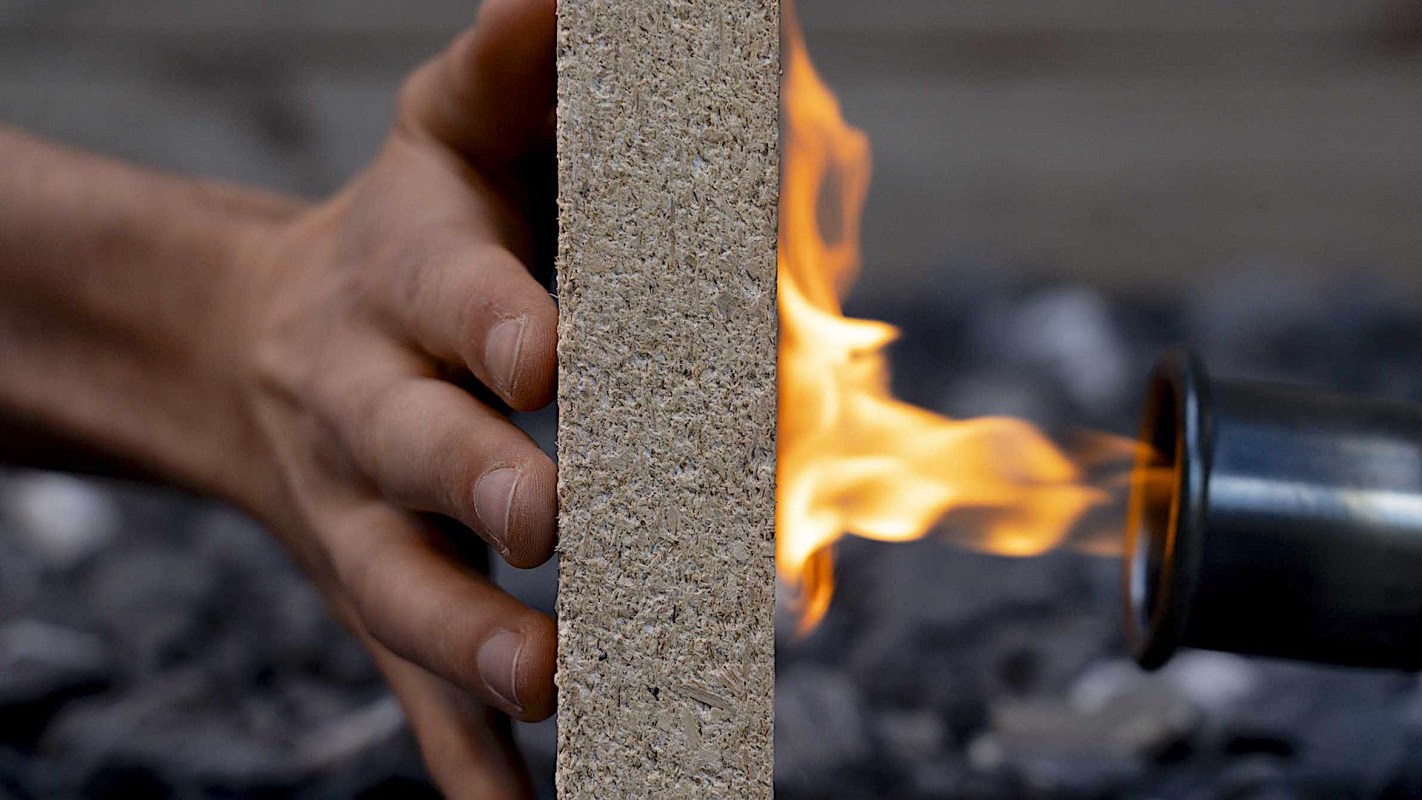
What do sawdust, a mineral commonly associated with wastewater facilities, and an enzyme derived from watermelon seeds have in common?
Based on new research, these seemingly unrelated materials could be used to create a fire-resistant building material for your next home.
Researchers at ETH Zurich in Switzerland have invented a way to combine sawdust with the mineral struvite and an organic enzyme to create a versatile construction material that is stronger than original spruce lumber, according to Interesting Engineering.
The new material has shown strong fire-retardant properties and durability — features that would make it ideal for the construction of interior walls and partitions.
The new material uses sawdust, largely a waste product of the lumber industry that often ends up in landfills. This could help drive down the costs of new-home construction.
According to the National Association of Homebuilders, the rising cost of building materials has been a key obstacle to achieving housing affordability. The cost of lumber alone contributes significantly to the price of constructing a new home.
TCD Picks » Quince Spotlight
💡These best-sellers from Quince deliver affordable, sustainable luxury for all




"The average new single-family home uses more than 2,200 square feet of softwood plywood and 6,800 of OSB [oriented strand board, an alternative to plywood], in addition to roughly 15,000 board feet of framing lumber," per the NAHB.
Additionally, the fire-retardant qualities of the new material could help builders meet stringent new standards that require new homes to be more fire-resistant.
For example, the city of Bend, Oregon, is considering instituting new requirements to make homes and neighborhoods more resilient in the event of a fire. However, home builders have warned that these new regulations could drive up the cost of new homes.
By transforming a waste product into a new fire-resistant building material, the invention could help lower home costs while also reducing fire risk and waste.
While more research remains to be done, the new invention could end up being a rare win-win-win situation.
|
Which of these savings plans for rooftop solar panels would be most appealing for you?
Click your choice to see results and earn rewards to spend on home upgrades. |
 Save $1,000 this year 💸
Get TCD's free newsletters for easy tips to save more, waste less, and make smarter choices — and earn up to $5,000 toward clean upgrades in TCD's exclusive Rewards Club.






