


The New York Times' product recommendation service Wirecutter recently shared some tips for improving indoor air quality while using a gas stove.
What's happening?
The product-focused outlet identified several methods to help people avoid toxic pollutants emitted by gas stoves.
For instance, experts recommend turning on the range hood whenever the gas stove is used. Hoods that vent to the outdoors are preferable to those that recirculate air through a filter, and size and power can also make a difference.
For those without a range hood, experts suggest opening a window or door to the outside while cooking. Two open windows are ideal because they create a cross-breeze.
TCD Picks » Induction Cooking
💡Discover the induction option that’s just right for your needs and your home


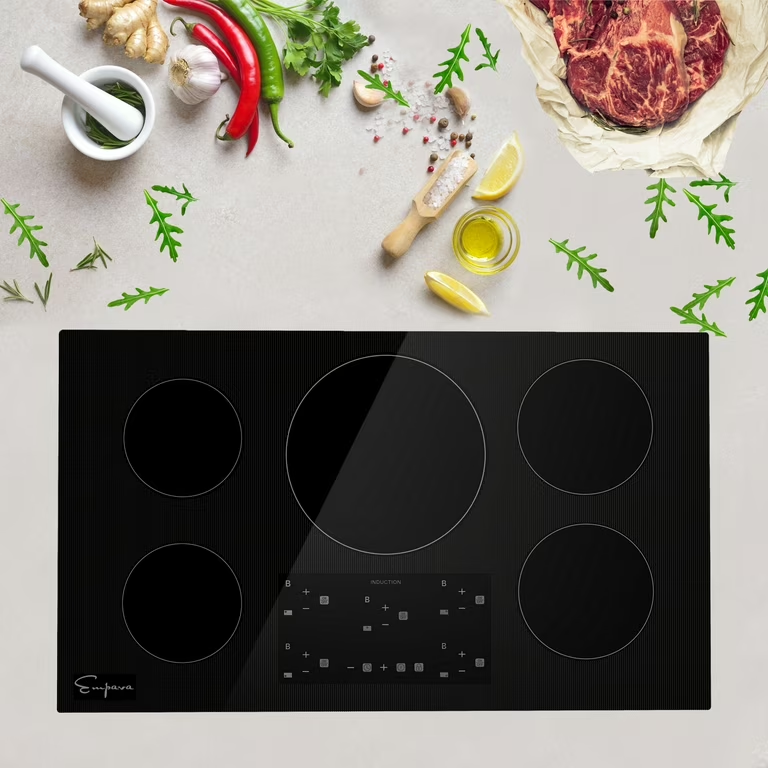

Wirecutter noted that research has shown that cooking fast and hot is better than low and slow. A carbon monoxide detector, meanwhile, can help detect dangerous levels of the harmful gas, so ensuring a home's detector is in proper working order is essential.
Using non-gas appliances is another tack to take.
Why is this important?
Wirecutter explained that gas stoves have long been linked to pollutants such as carbon monoxide, formaldehyde, and nitrogen dioxide. Studies have also linked the use of these appliances to higher rates of childhood asthma. And a 2024 Stanford-led study, meanwhile, estimated that nitrogen dioxide released from gas stoves might contribute to as many as 19,000 premature deaths annually in the United States.
"[The studies have also] shown that using a gas stove can produce elevated levels of benzene on a par with those from secondhand tobacco smoke, or more tiny toxic particles than the exhaust of a diesel-powered vehicle," according to the Times' product review service.
Save $10,000 on solar panels without even sharing your phone number Want to go solar but not sure who to trust? EnergySage has your back with free and transparent quotes from fully vetted providers in your area. To get started, just answer a few questions about your home — no phone number required. Within a day or two, EnergySage will email you the best options for your needs, and their expert advisers can help you compare quotes and pick a winner. Solar panels can save you more than $50k over their 25-year lifespan, and EnergySage can help you save as much as $10k on installation. Which begs the question — isn't that worth an email or two? |

What more can be done?
Cooking with countertop appliances, such as a plug-in induction stove, is "one immediate and affordable way to improve your indoor air quality," according to Wirecutter.
These electric devices are relatively inexpensive, starting at around $50, and are not known to release any harmful toxins. They can work well in just about any home and can be an especially good solution for renters.
|
Which of these savings plans for rooftop solar panels would be most appealing for you?
Click your choice to see results and earn rewards to spend on home upgrades. |
 Save $1,000 this year 💸
 Homeowners ready for a larger investment might consider replacing their gas stove with an induction range. Some states even offer rebates of up to $840 on new induction ranges thanks to government incentives.
And not only will cooking with an induction stove or burner help keep indoor air cleaner, but these devices can also cook faster while being more energy- and cost-efficient.

Get TCD's free newsletters for easy tips to save more, waste less, and make smarter choices — and earn up to $5,000 toward clean upgrades in TCD's exclusive Rewards Club.






