


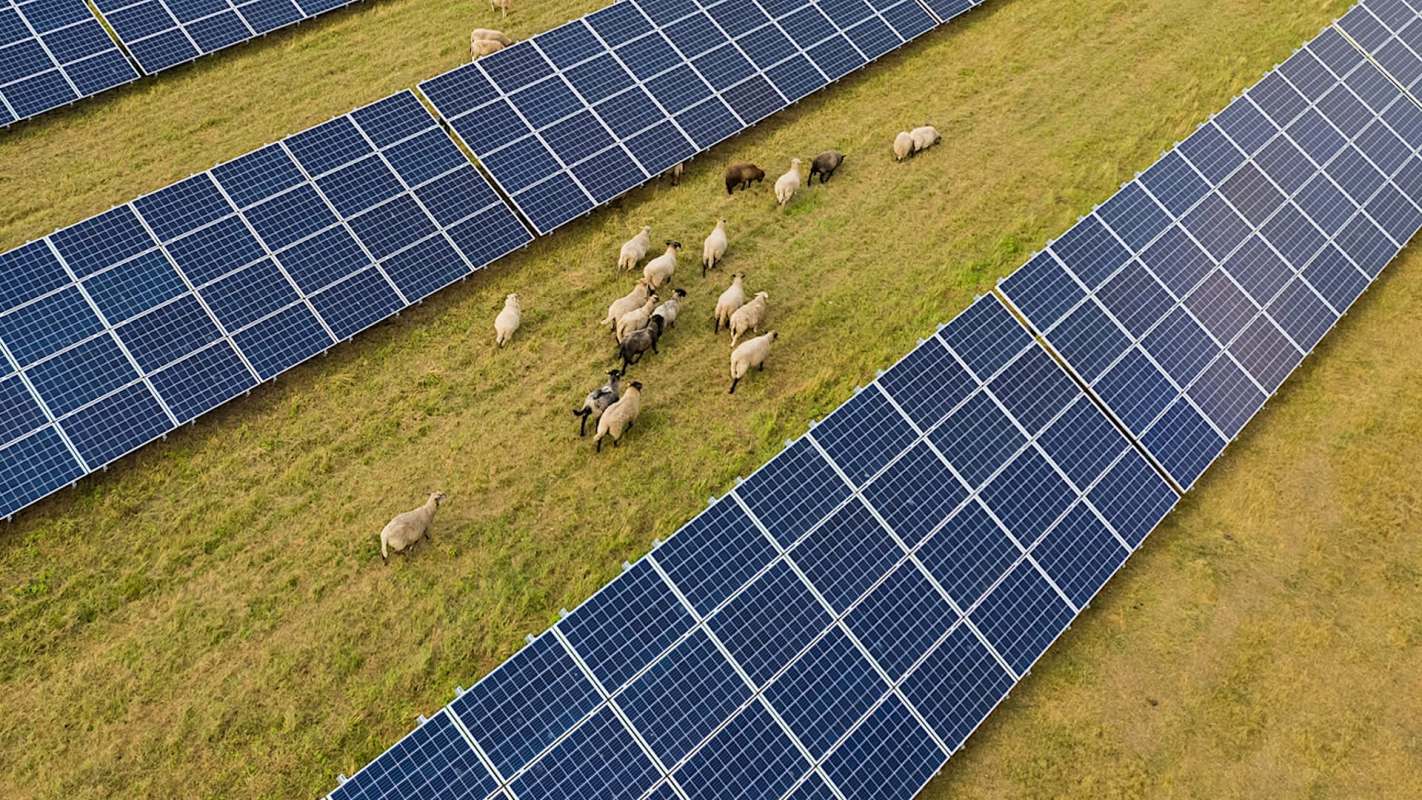
As farmers around the globe are hit by extreme weather, tariffs, and other challenges, some are turning to a "much better" industry practice to make up for lost income.
Australian farmer Tom Warren is one such farmer, according to Sinar Daily, who has invested in agrivoltaics, the pairing of agriculture with solar panels, leading him to make more than he would with only his sheep.
Sheep and the wool they produce have been a mainstay of the Australian economy for at least 150 years, but to produce excellent wool, sheep need a constant diet.
By installing solar panels in the fields where sheep graze, the grass beneath the panels remains green, providing a better diet for the animals. In fact, a study in New Zealand found that sheep grazing beneath solar panels produced wool that was no worse than sheep grazing in open pastures.
While the sheep graze, those solar panels produce around 20 megawatts of energy to help meet the local community's demands and bring in money.
"The solar farm income is greater than I would ever get off agriculture in this area — regardless of whether I have sheep running under the panels or not," Warren explained, per Sinar Daily.
TCD Picks » Quince Spotlight
💡These best-sellers from Quince deliver affordable, sustainable luxury for all




Warren's farm is far from the only one to pair sheep and solar panels.
In fact, in the United States, there are organizations that train farmers on solar grazing, such as the American Farmland Trust and American Solar Grazing Association. Farmers in Illinois are investing in solar grazing while encouraging consumption of lamb meat.
The future of agrivoltaics looks bright, too.
In the U.S. alone, agrivoltaic sites encompassed 27,000 acres that produced 4.5 GW in 2020. By 2024, those sites had grown to encompass 60,000 acres, producing 10 GW of solar energy. According to the National Laboratory of the Rockies, almost 600 agrivoltaic sites operate in the country.
|
Which of these savings plans for rooftop solar panels would be most appealing for you?
Click your choice to see results and earn rewards to spend on home upgrades. |
 Save $1,000 this year 💸
 Agrivoltaics not only generates income for farmers and provides sheep with a better diet but also helps reduce energy costs and conserve natural resources, leading to cleaner air and water.
"As more farmers are starting to adopt renewable or host large-scale renewable on their land and continuing to farm … the more visible it is in the community," consulting firm Farm Renewables Director Karin Stark told Sinar Daily.
Warren said: "Normally they would seek out trees and camp under the trees, but you can see that the sheep are seeking out the shade of the panels. So, it's a much better environment for them as well."

Get TCD's free newsletters for easy tips to save more, waste less, and make smarter choices — and earn up to $5,000 toward clean upgrades in TCD's exclusive Rewards Club.






