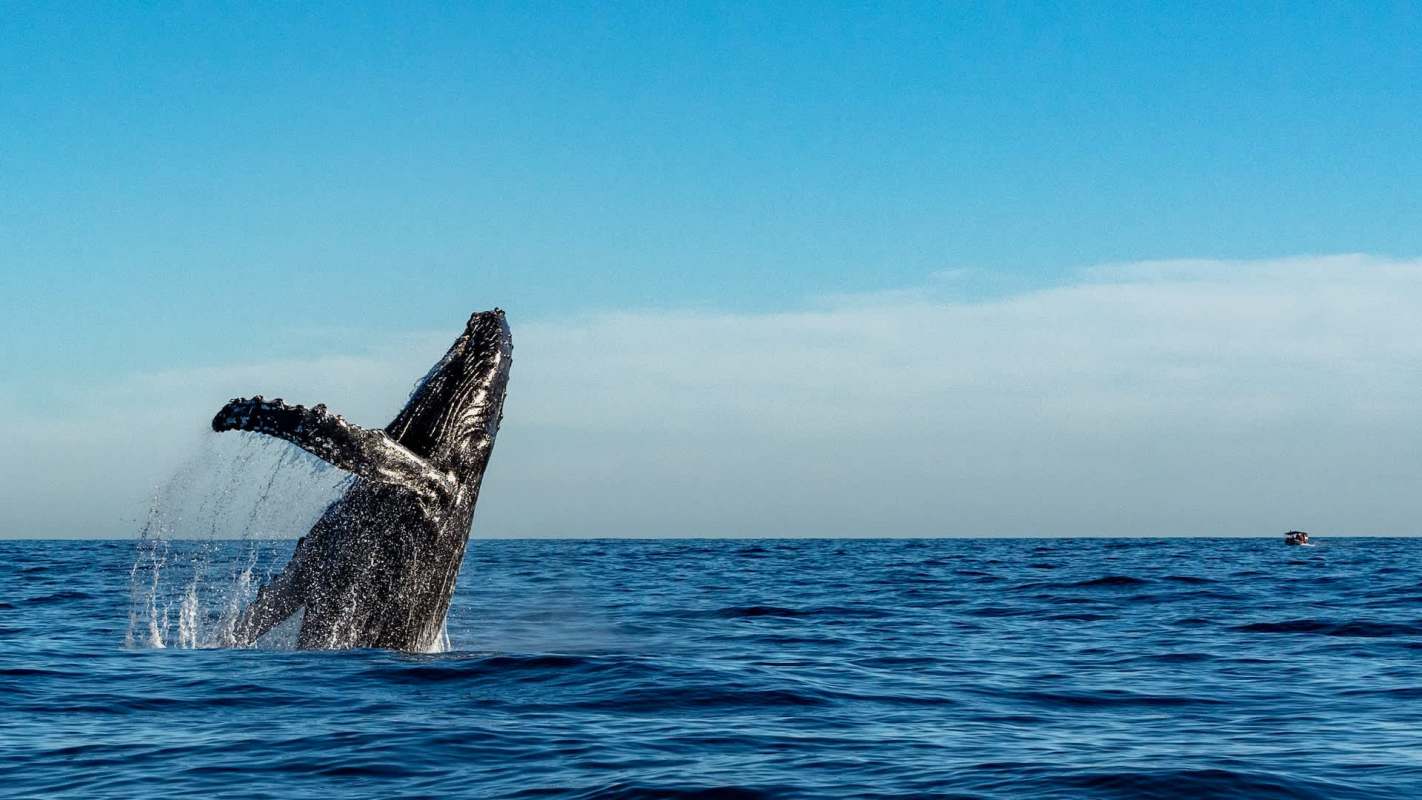
New research points to an alarming reason why humpback whales are being seriously injured by fishing equipment.
What's happening?
Rising ocean temperatures are shrinking the critical ocean foraging habitat of the California Current and driving humpback whales closer to the coast, where they are more likely to become entangled in fishing gear, according to a study published in PLOS Climate in February.
The California Current, off the West Coast of the United States, relies on a process known as coastal upwelling, as Inside Climate News described in its coverage of the research. In this process, winds draw cooler, nutrient-rich water from the deep ocean, sustaining dense schools of anchovies, sardines, and krill. That's the prey on which humpback whales rely after traveling back north from their breeding grounds off the coast of Mexico.
But heat waves weaken coastal upwelling, reducing the amount of food readily available to humpbacks. This leads the whales closer to shore in search of other prey, where they can run into fishing activities and gear like Dungeness crab traps.
Researchers found more entanglements in years with warmer temperatures. For example, before 2014, fewer than 10 humpback whale entanglements were reported, whereas in 2015 and 2016 — years with significant heat waves — the numbers increased dramatically.
A similar pattern emerged in 2024, when El Niño warmed ocean waters. That year, 31 whales were reportedly entangled.
TCD Picks » Quince Spotlight
💡These best-sellers from Quince deliver affordable, sustainable luxury for all




Humpback whales are naturally curious and known to rub against kelp and fishing lines, which can then become wrapped around their bodies.
"If it gets in the mouth, they can't push it out with the tongue because it's caught in the baleen," Kathi George, Director of Cetacean Conservation Biology at California's Marine Mammal Center, told Inside Climate. "And then they go through that kind of throwing themselves, breaching, trying to get rid of the entanglement."
Why are whale entanglements concerning?
The new study referred to the issue of reduced feeding grounds as "habitat compression." And it isn't a problem for whales alone.
Habitat compression can disrupt entire marine ecosystems, harming species such as seals and birds as well. It can also disrupt food security and livelihoods for people who rely on fishing.
|
Which of these savings plans for rooftop solar panels would be most appealing for you?
Click your choice to see results and earn rewards to spend on home upgrades. |
 Save $1,000 this year 💸
 This "compression" also occurs on land. As humans continue to expand construction into wildlife habitats, animals such as mountain lions are often forced into residential communities, posing safety risks.
Human-caused pollution is a primary driver of the heat waves affecting the California Current and whale populations in the area. According to the U.S. National Oceanic and Atmospheric Administration, 2025 was the third-warmest year on record, with upper-ocean heat content reaching a record high that year.
What's being done about whale entanglements?
The latest research in this area leverages data from NOAA's Habitat Compression Index, developed under the guidance of study co-author Jarrod Santora, according to Inside Climate.
This tool can track upwelling and predict periods when whales may congregate closer to shore. This could help inform fishing operations and gear placement to avoid whale injuries.
There are also efforts to clean up excess fishing gear left in the ocean, often referred to as "ghost gear," and a push for alternative gear that reduces entanglement risks.

Get TCD's free newsletters for easy tips to save more, waste less, and make smarter choices — and earn up to $5,000 toward clean upgrades in TCD's exclusive Rewards Club.