


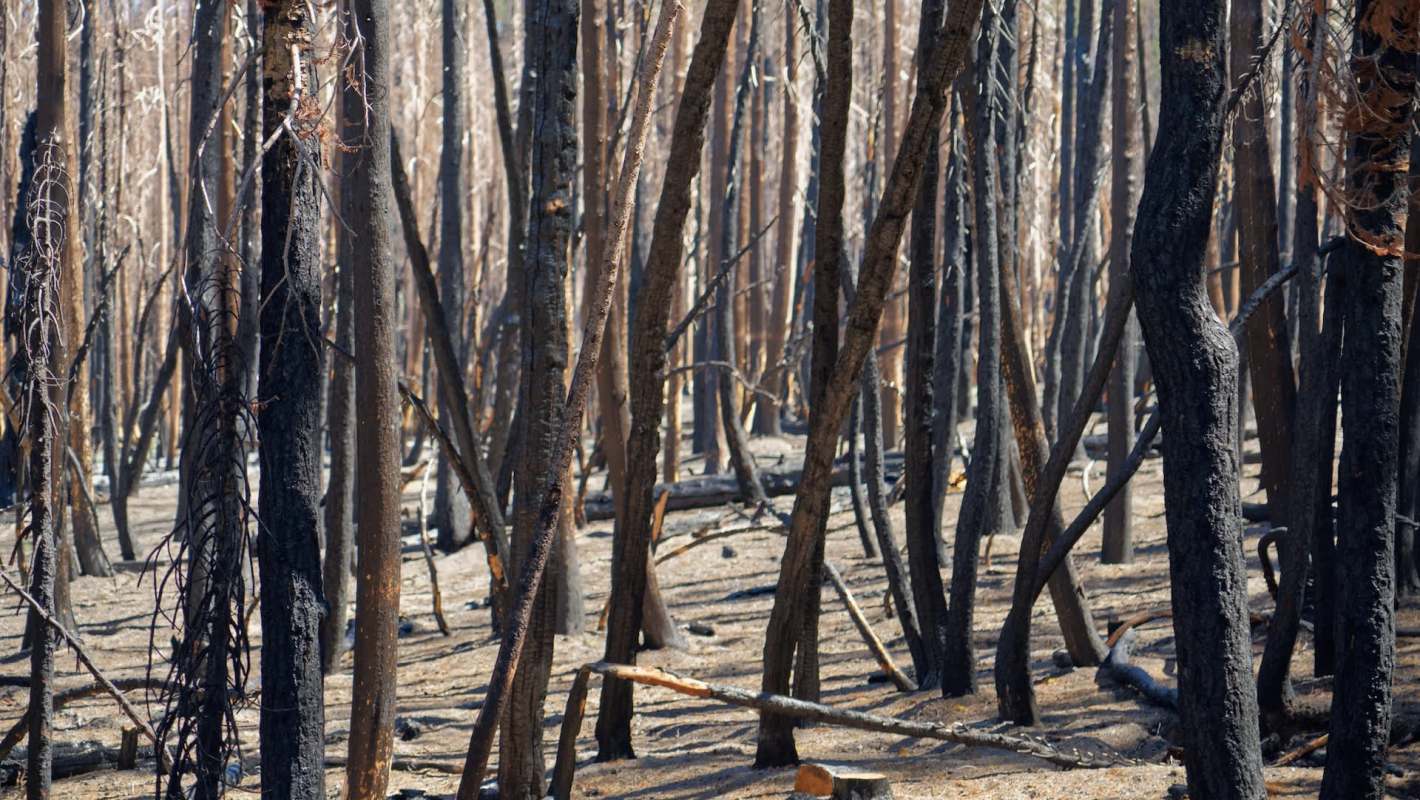
A snow drought that has plagued much of the western United States could be a harbinger of an upcoming challenging and dangerous wildfire season. A warm and dry winter has depleted the snowpack for several states.
The warmth seen so often in the West during winter is now spilling over into meteorological spring. Every state from Washington and Montana southward to California, Arizona, and New Mexico saw cities either tie or break records during the first week of March. Many more records are poised to fall during the second week of meteorological spring.
"The snowpack in Colorado's mountains is the lowest it's been in over 40 years," the director of the Colorado Climate Center at Colorado State University, state climatologist Russ Schumacher, told NBC News. "We're sitting here in early March, and there's not that much time left for things to turn around, unfortunately. The hope now is that instead of it being a historically bad year, it ends up going down as just a bad year."
Preliminary data indicate the contiguous U.S. had its second-warmest winter on record, with the most anomalous warmth targeting the West, from the Rockies to the Pacific coast. Washington Post meteorologist Ben Noll reported that the average high temperature for the country was 46.6 degrees, the highest on record.
Elko, Nevada, had its warmest winter on record and reported just 27% of the average snowfall for the season. Tahoe City, California, had its third-warmest winter since records began in 1910. With an average temperature of 40.7 degrees, Salt Lake City had its warmest winter on record.
Even after some places in the West got some much-needed snow, the warm winter pattern took a toll.
TCD Picks » Quince Spotlight
💡These best-sellers from Quince deliver affordable, sustainable luxury for all




"After an epic 10-foot Sierra snowstorm two weeks ago, California's snowpack briefly surged to 75% of normal, but it has rapidly dwindled and is now just 53% of normal," observed meteorologist Colin McCarthy, the founder of US Stormwatch, on the social platform X. "Storms have simply been too warm this winter, leading to high snow levels and rain falling instead of snow. Long stretches of record warm weather have also caused snowpack to decrease in the middle of winter."
One way to estimate the amount of water stored in snowpack is by measuring snow-water equivalent, defined by the National Weather Service as "the depth of water that would cover the ground if the snow cover was in a liquid state."
As of Friday, the snow-water equivalent for large portions of Washington, Oregon, California, Nevada, Utah, Colorado, Montana, New Mexico, and Arizona was less than half compared to the 1991-2020 median, according to the Natural Resources Conservation Service. The latest analysis showed the snow-water equivalent had dwindled to 25% or less in several spots.
Our warming world is making conditions more conducive to wildfires.
"Increases in large fire activity and area burned have been driven by rising temperatures, reduced winter snowpack, earlier snowmelt, reduced summer precipitation, and increased evaporation," warns the U.S. Department of Agriculture. "Under climate change, we can expect the wildfire activity to increase as temperatures continue to warm, lengthening the fire season further, and as drought continues to afflict wildland ecosystems."
|
Which of these savings plans for rooftop solar panels would be most appealing for you?
Click your choice to see results and earn rewards to spend on home upgrades. |
 Save $1,000 this year 💸
Get TCD's free newsletters for easy tips to save more, waste less, and make smarter choices — and earn up to $5,000 toward clean upgrades in TCD's exclusive Rewards Club.







