


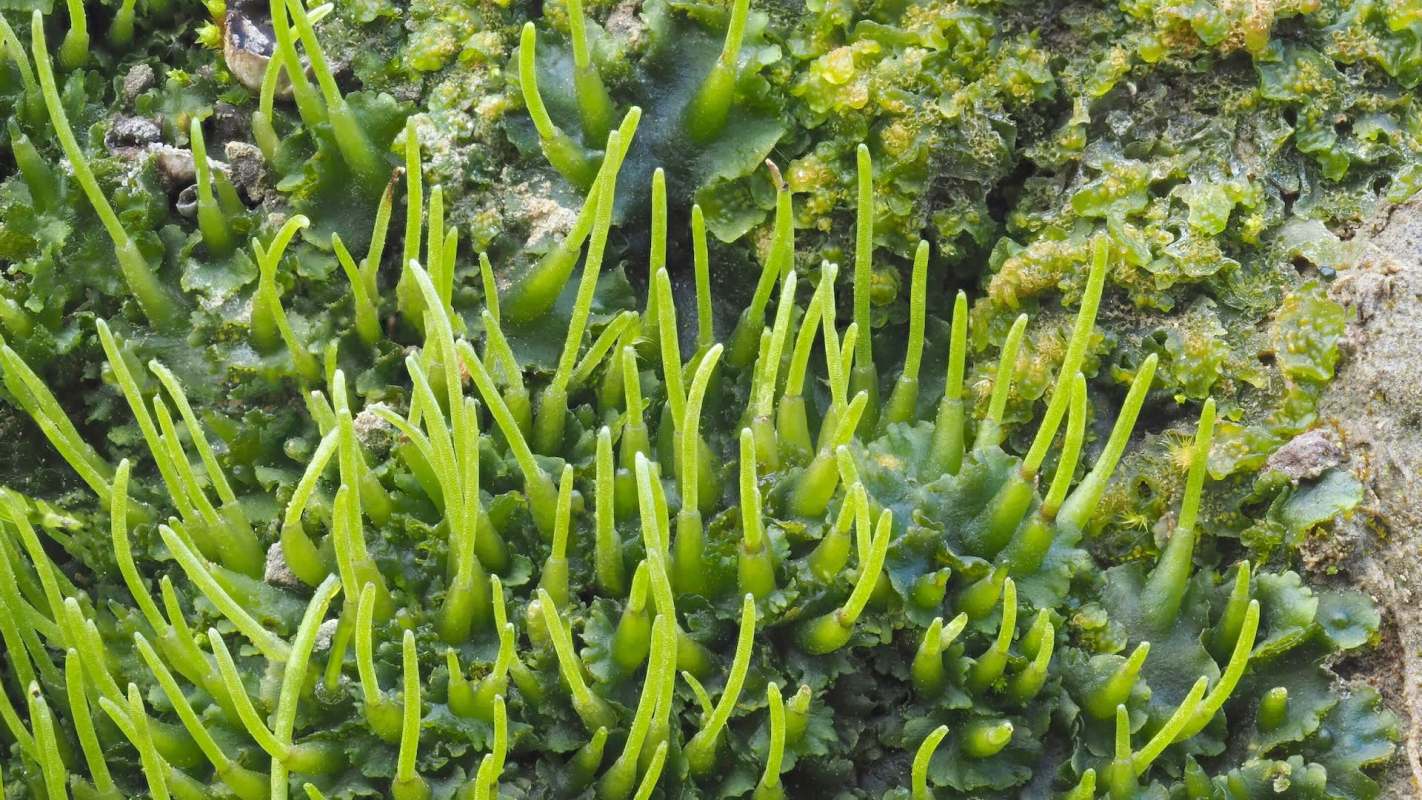
A team of researchers made a groundbreaking discovery that could "turbocharge crop yields," according to the Boyce Thompson Institute.
The findings pertained to the unique traits of small land plants known as hornworts and were published in the journal Science on Thursday.
Plants rely heavily on an enzyme known as Rubisco for photosynthesis, the process by which they convert sunlight into food.
Professor Fay-Wei Li participated in the study and explained that, much like human beings, Rubisco's potential productivity often fell victim to extrinsic distractions.
"Rubisco is arguably the most important enzyme on the planet because it's the entry point for nearly all carbon in the food we eat. But it's slow and easily distracted by oxygen, which wastes energy and limits how efficiently plants can grow," Li said in the Phys.org article.
In fact, Rubisco is so capricious that some "clever" plants evolved to offset that effect — like telling a chronically late friend that a party starts half an hour earlier than it does.
TCD Picks » Quince Spotlight
💡These best-sellers from Quince deliver affordable, sustainable luxury for all




Hornworts have pyrenoids, tiny chambers that concentrate carbon dioxide around ambient Rubisco, making photosynthesis more efficient.
According to BTI, scientists have long realized that scaling the plants' nature-designed hack to crops could be a game changer for agriculture, but "algae machinery has proven stubbornly difficult to transfer."
A closer look at hornworts, which are a bit more similar to food crops than algae, yielded incredibly useful insights. Researcher Tanner Robison said the team expected hornworts to function like algae in that respect and were shocked to learn otherwise.
"Instead, we discovered they've modified Rubisco itself to do the job," Robison acknowledged, referencing a unique protein component of the species.
|
Which of these savings plans for rooftop solar panels would be most appealing for you?
Click your choice to see results and earn rewards to spend on home upgrades. |
 Save $1,000 this year 💸
 Researchers tested RbcS-STAR in a related species without pyrenoids and successfully replicated the process, then moved on to less closely related plants to further success.
According to Li, the findings showed that plant species' naturally evolved processes could potentially be replicated to boost crop yields.
"This research shows that nature has already tested solutions we can learn from. Our job is to understand those solutions well enough to apply them where they're needed most — in the crops that feed the world," Li said.

Get TCD's free newsletters for easy tips to save more, waste less, and make smarter choices — and earn up to $5,000 toward clean upgrades in TCD's exclusive Rewards Club.







