


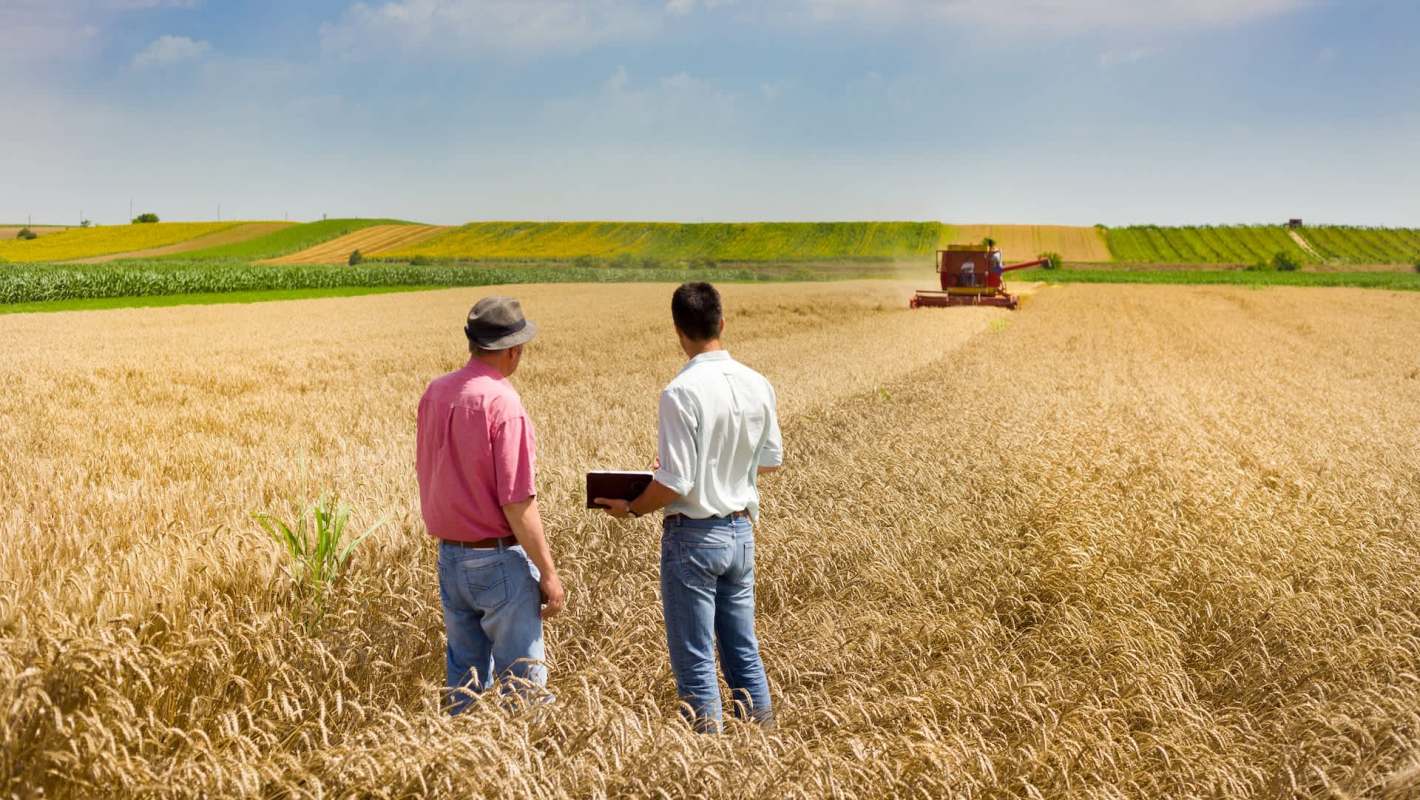
A growing number of farmers are dovetailing their harvests with a lucrative second "crop," and the public radio show Science Friday recently profiled the practice.
At the beginning of the segment, host Ira Flatow noted that American farmers, seeking ways to make farmland "more economically and environmentally stable," were turning to solar panels.
"Agrivoltaics" is a portmanteau combining "agriculture" and "photovoltaic," the latter referring to the conversion of sunlight into electricity. Though conceptualized in the 1980s, agrivoltaics only began drawing widespread interest over the past decade.
As Flatow noted, solar panels provide needed shade to many crops, and evaporation "cools the panels," a microcosm of how agrivoltaics work symbiotically in farm environments.
KBIA news producer Jana Rose Schleis appeared on Science Friday to discuss agrivoltaics, having covered the topic in depth through real-world applications in the Midwest.
Flatow asked Schleis whether farmers were "making money" on two harvests — the crops they grew and the energy their farms drew from the sun — and Schleis concurred.
TCD Picks » Quince Spotlight
💡These best-sellers from Quince deliver affordable, sustainable luxury for all




"A farmer has said to me in the past, it's sort of like farming the sun," she recalled.
Linda Hetzel has farmed the same land in Missouri for three decades, and she installed solar panels after first experimenting with shading her plants using leaves during a 2012 drought.
According to Schleis, Hetzel's crops weren't alone suffering in the heat; as temperatures have risen, she has had to adapt her practices to avoid dangerous midday temperatures.
Hetzel saw a "change in the intensity of the heat she's experiencing each summer, to the point where she's getting up at first light to harvest before it gets too hot, both for herself as a human working into those outside conditions, but also for the produce," Schleis said.
|
Which of these savings plans for rooftop solar panels would be most appealing for you?
Click your choice to see results and earn rewards to spend on home upgrades. |
 Save $1,000 this year 💸
 Later in the segment, Flatow spoke with University of Illinois professor of environmental economics Madhu Khanna about the feasibility of solar arrays on farmland, barriers to adoption, and farmers' feedback about renewable energy and their own land.
Flatow told Khanna that several farmers and ranchers had come on Science Friday to discuss their direct experience, with at least one reporting higher profits on the energy side than the crop side.
"I remember, years ago, talking to a rancher in Oklahoma who had one of the first wind farms, very small wind farms. And he said, 'I make more money doing renewables than I do ranching,'" he said, asking Khanna whether agrivoltaics could be a steady fallback source of income.
"[Energy] is a much higher-value commodity and less risky than crop farming," Khanna noted.

Get TCD's free newsletters for easy tips to save more, waste less, and make smarter choices — and earn up to $5,000 toward clean upgrades in TCD's exclusive Rewards Club.






