


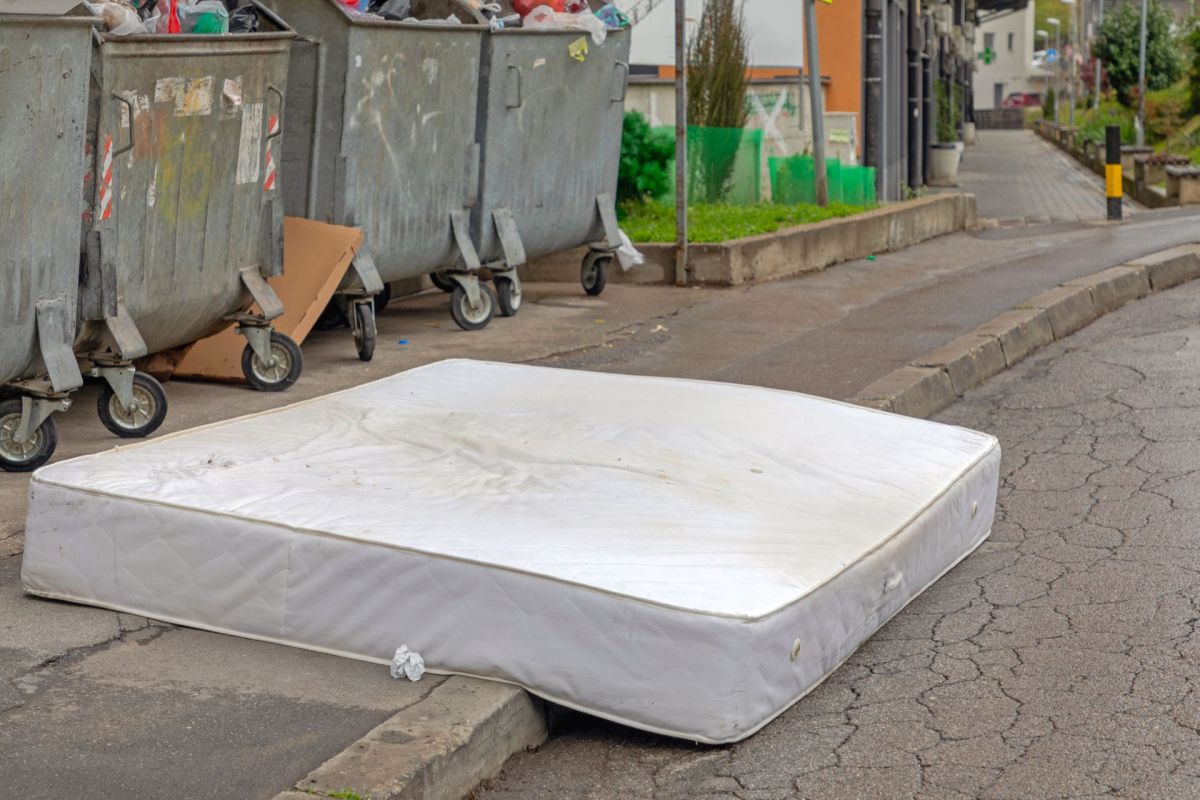
Scientists at Swinburne University of Technology in Australia discovered a way to turn one of landfills' softest problems, old mattresses, into high-performing building insulation using fungi.
An estimated 50,000 mattresses are thrown away every day in the United States, with nearly 20 million ending up in dumps annually, according to Recycling Today. Despite containing upward of 75% recyclable material, outside of a few states with recycling programs, most mattresses end up in landfills, where they can take up to 120 years to break down.
Their bulk, mixed materials, and durability make them difficult to recycle without a proper approach. But fungi could change that, as it already has by "eating" plastic waste and old tires in previous research.
According to this research, published in Scientific Reports, the scientists cultivated spores of Penicillium chrysogenum, a close relative of the mold that gave us penicillin, and combined them with shredded polyurethane foam harvested from discarded mattresses. As the fungal roots spread through the material, they triggered a natural process called biomineralization, producing calcium carbonate deposits that bonded with the foam to create a lightweight, solid structure.
The result is a mycelium-based bio-composite insulation material that retains over 90% of its mass at temperatures near 1,832 degrees Fahrenheit, far outperforming conventional glass wool insulation in heat resistance using mycelium-based bio-composites.
Its thermal conductivity puts it on par with sheep wool and recycled cellulose insulation, according to the study, two of the most widely used sustainable options.
TCD Picks » Quince Spotlight
💡These best-sellers from Quince deliver affordable, sustainable luxury for all




Better insulation means more comfortable homes that are cheaper to heat and cool. Buildings account for a significant share of energy use, and upgrading insulation is one of the most effective ways to cut household energy costs — by as much as 15% on heating and cooling — while reducing air pollution from burning gas and coal to regulate indoor temperatures.
This fungi-powered innovation could deliver those benefits while diverting millions of mattresses from landfills each year, according to Popular Science. Landfill use contributes to poor air quality in local communities, which can lead to significant health effects from toxic leachate and explosive methane, the New York Department of Health warns.
"Mattresses are durable, bulky, and often end up in landfills," study co-author and chemical engineer The Hong Phong Nguyen said, per TechXplore. "Through natural biological processes, we can give this waste a second life."
The new insulation is still in its early stages. Researchers say their future work will focus on large-scale fire performance testing and optimizing the manufacturing process before the material can be used in real-world construction, according to the study.
|
Which of these savings plans for rooftop solar panels would be most appealing for you?
Click your choice to see results and speak your mind. |
 Save $1,000 this year 💸
 The team believes further development could lead to fire-resistant insulation panels or even 3D-printed building components made entirely from recycled waste.
"Our work shows how combining biology with waste materials, while leveraging deep manufacturing science, can lead to smart, low-impact solutions that better the environment and the lives of everyone," Nguyen said.

Get TCD's free newsletters for easy tips to save more, waste less, and make smarter choices — and earn up to $5,000 toward clean upgrades in TCD's exclusive Rewards Club.






