


This week, we have a new look at fast charging, a secret from the No. 1 EV market in the world, and lots of other news about clean machines you need to know right now.
The secret to a healthy EV battery? Don't charge so fast
If you're always in a rush and use those tempting fast chargers, you may be degrading your EV battery faster.
Geotab looked at roughly 23,000 cars and two dozen models, and it found that if you fast-charge no more than 12% of the time, your battery will lose just 1.5% of its capacity per year.
But if you use them for more than that, you can expect further battery degradation. Up your fast-charger usage to 40%, and the study said you'll drop 3% annually.
Still, Geotab reassured us that degradation only really kicks in when your car spends more than 80% of its life in very low or very high levels of charge levels. An average battery would, after eight years of use, still have, on average, 81.6% of its capacity.
BMW's new electric M3 will be a beast
At some point in 2027, we'll get what promises to be one of the most exciting (to drive) EVs ever released to the mass market.
TCD Picks » Quince Spotlight
💡These best-sellers from Quince deliver affordable, sustainable luxury for all




The BMW M3 EV will have four electric motors (two per axle), providing all-wheel drive that can be turned off at the front for better efficiency.
BMW is making a lot of noise about the specially developed battery, which is claimed to deliver over 100 kilowatt hours of energy and offer structural stiffness.
But the quirky feature everyone is talking about? The M3 EV reportedly will feature simulated gear shifts and artificial engine noise to entice the M series' fanatical, purist fanbase.
China Goes Big on EVs, Sells Off Its Gasoline Cars to the Rest of the World
China has supported its burgeoning EV industry to such an extent that cheap yet high-quality vehicles are increasingly common on the streets of pretty much every country that hasn't banned them (hello, U.S.) or hit them with massive tariffs.
|
Would you be more likely to drive an EV if you could charge it in 5 minutes? Click your choice to see results and speak your mind. |
 Yes 👍
Yes 👍 But that means China's colossal internal-combustion engine industry has been unable to compete at home against the allegedly massively subsidized EVs.
Instead, the manufacturers have pushed them out worldwide, to Europe, Africa, and South America.
So much so that ICE cars have made up 76% of Chinese auto exports in the last five years, from around 1 million cars to 6.5 million.
That's good news for China's auto industry, but not so great for pollution worldwide.
Lucid has solved a major issue with GPS
That "searching for signal" alert is one any urban driver dreads when emerging from a parking garage or tunnel.
So, nervous navigators have a reason to celebrate if they have a Lucid, because as of the end of January, a software update will pair the cars with tech firm Trimble, which has a system that melds standard satellite data with incredibly sensitive inertial sensors in the car.
Norway's EV push is continuing — but there's more to the data
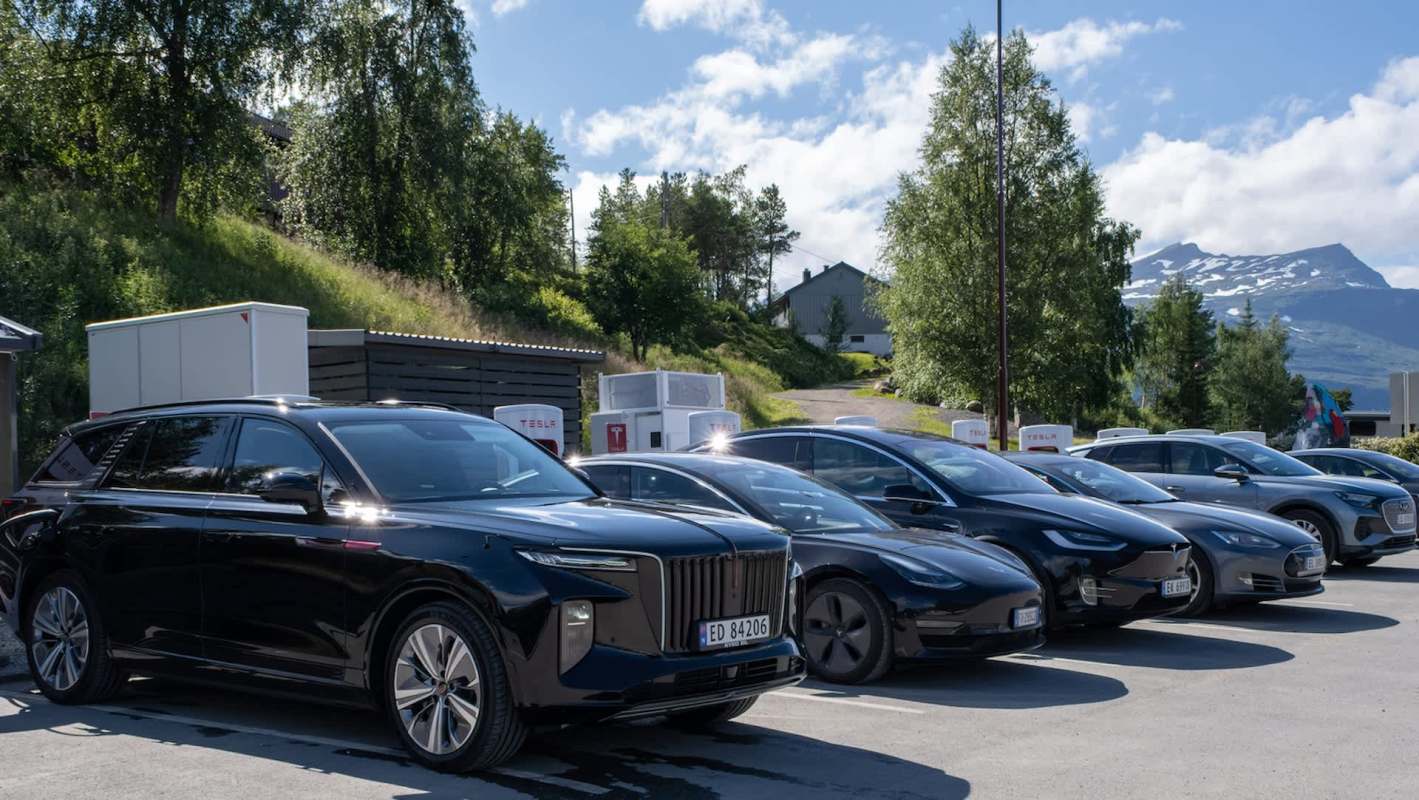
We're all familiar with EVs' meteoric rise in one Scandinavian country: 1% of new cars sold in Norway were electric in 2011, and last year, that figure was nearly 96%.
But there's more to the story. First of all, Norway never had a successful homegrown carmaker, so there was no natural backlash to the surge of imports.
Second, taxes. Norway didn't focus on incentives to make people buy EVs; it just taxed based on carbon pollution. Rather than a carrot, it also used a stick.
And third, politics. Norway has a proportional representation system, meaning coalitions and cooperation are vital, and EV ownership has not been as polarizing politically as it has here.
Fourth: wealth. Norway is far from a poor nation, and the ironic fact that the largest EV adopter (by percentage, at least) is also a huge petroleum exporter. Norway is the third-largest exporter of gas, and the petroleum sector makes up a quarter of the country's GDP and over half its total exports.

Get TCD's free newsletters for easy tips to save more, waste less, and make smarter choices — and earn up to $5,000 toward clean upgrades in TCD's exclusive Rewards Club.






