


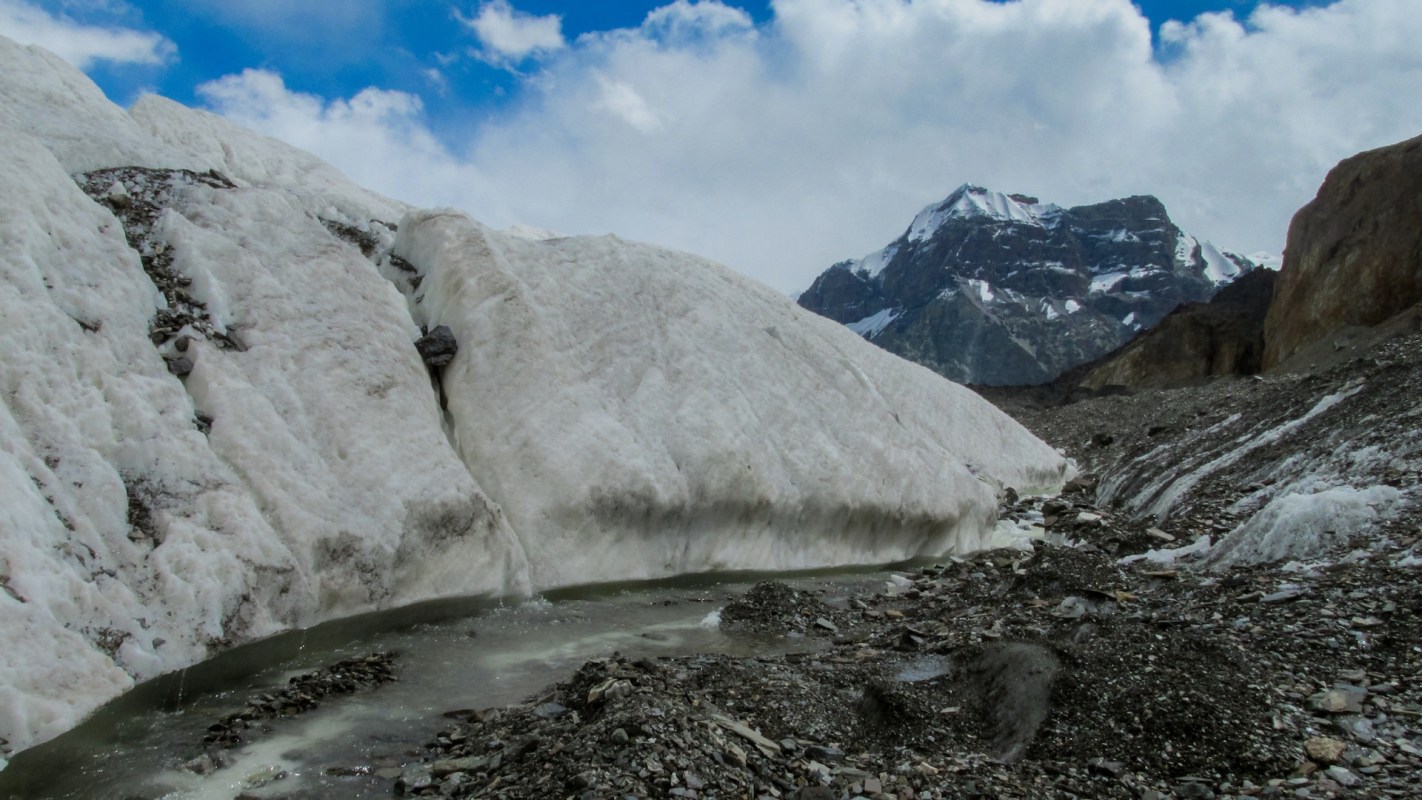
The rapid melting of glaciers in Central and West Asia is creating a burgeoning crisis for 340 million people who rely on the rivers of ice for drinking water and food, as well as to support their livelihoods.
What's happening?
Floods, mudflows, and droughts threaten the region and its people, who rely on glaciers in the Pamir and Tien Shan mountains, Asia-Plus reported.
These risks are part of a "cascading crisis" in which rising temperatures melt ice, "accelerate landslides and mudflows, increase flood frequency, and cause droughts that lead to crop losses and pasture depletion," according to the outlet. It also noted that glacial lake outbursts, heat-related illnesses, and poor water quality were more likely.
The Asian Development Bank has earmarked $3.5 billion for the Glaciers to Farms program with the goal of using science and risk management to save lives. Asia-Plus cited the town of Blatten, Switzerland, which was destroyed in May when a melting glacier collapsed. Early warning systems enabled hundreds of residents to evacuate the week prior.
Why is this important?
The nine countries under the umbrella of G2F are Armenia, Azerbaijan, Georgia, Kazakhstan, Kyrgyzstan, Pakistan, Tajikistan, Turkmenistan, and Uzbekistan. The work is essential for 45.1 million people, and the hope is that it can ensure water and food security, shore up infrastructure, and create stronger social safety nets.
"G2F will support the creation of infrastructure for climate finance, mentoring for agriculture enterprises, and design of cross-border pilot projects," per the program website.
TCD Picks » Quince Spotlight
💡These best-sellers from Quince deliver affordable, sustainable luxury for all




It highlighted that temperatures in Central and West Asia are rising 0.2-0.4 degrees Celsius (0.4-0.7 degrees Fahrenheit) per decade and that half of the area's glaciers could melt by 2100. G2F will use climate science to plan adaptation measures and grants and loans to finance the projects.
What's being done about glacier melt in Central and West Asia?
The Green Climate Fund called G2F one of the biggest adaptation initiatives in the world and says it hopes to avoid disaster by linking science, governance, and finance to community action. Monitoring glacier conditions will protect agriculture, energy, water supply systems, and health care, Asia-Plus explained.
Other aspects of the program include crop insurance, farmer support, and water supply system upgrades. Locals will get alerts on their cellphones and be trained to respond to warning signs.
"The ADB emphasizes that glaciers are the starting point of the entire food system, and as they shrink, there will inevitably be less water in the valleys, leading to less food," Asia-Plus stated.
|
How worried are you about rising ocean levels? Click your choice to see results and speak your mind. |
 Very 😰
Get TCD's free newsletters for easy tips to save more, waste less, and make smarter choices — and earn up to $5,000 toward clean upgrades in TCD's exclusive Rewards Club.







