


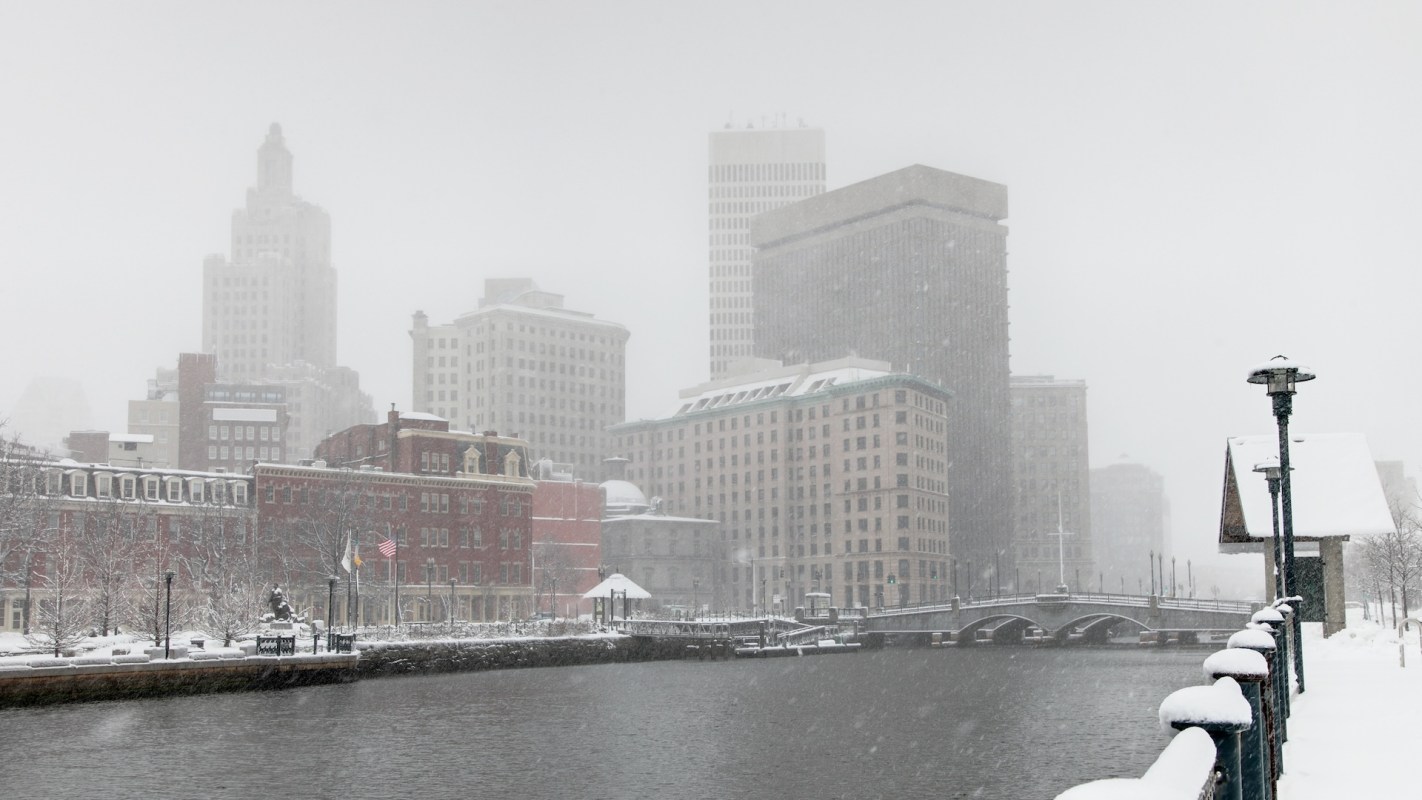
The season has barely begun, but some cities are already experiencing extreme winter weather. Another push of Arctic air arrives this week and could send temperatures tumbling to as much as 15 to 25 degrees below average in the central and eastern United States.
"My thinking is that the cold the first week of December is the appetizer and the main course will be in mid-December," climatologist Judah Cohen of the Massachusetts Institute of Technology told USA Today in late November.
Cohen had earlier posted on social media, "The most expansive region of most likely extreme cold on Earth stretches from the Canadian Plains to the U.S. East Coast in the third week of December."
With polar air plunging south into the northern plains and Great Lakes, a winter storm warning was issued on Wednesday for portions of the Upper Peninsula of Michigan. There, as much as a foot of snow could fall by Thursday afternoon. The bitterly cold air sweeping over the mostly open and relatively warmer waters of the Great Lakes will squeeze out areas of moderate to heavy snow downwind.
"Visibilities may drop below 1/4 mile due to falling and blowing snow," cautioned the National Weather Service office in Marquette, local outlet MLive reported. "Travel could be very difficult. The hazardous conditions could impact the Thursday morning commute."
Marquette is one of a number of cities already experiencing a "severe" to "extreme" winter, according to the Midwest Regional Climate Center. Those designations represent the two worst categories of the Accumulated Winter Season Severity Index.
TCD Picks » Quince Spotlight
💡These best-sellers from Quince deliver affordable, sustainable luxury for all




The AWSSI considers "the intensity and persistence of cold weather, the amount of snow, and the amount and persistence of snow on the ground" to gauge the severity of the winter season. Cities from as far north as Chicago to as far south as Asheville are experiencing extreme winters, according to the index.
New York City is experiencing an "average" winter season at the moment, hitting category three out of five. But that could change quickly as the cold air sweeps into the Northeast by the end of the week.
Forecasters with the New York National Weather Service office have said record-low temperatures in Bridgeport and at LaGuardia and JFK airports "may be in jeopardy on Friday." Some record cold maximum temperatures could also be set in the Northeast that day.
This week's Arctic outbreak is a result of a lobe of the polar vortex sinking south into the U.S.
|
How cold does it get where you live? Click your choice to see results and speak your mind. |
 Well below zero 🥶
 "The Arctic polar vortex is a band of strong westerly winds that forms in the stratosphere between about 10 and 30 miles above the North Pole every winter," the National Oceanic and Atmospheric Administration described back in 2021. "The winds enclose a large pool of extremely cold air."
Scientists believe our overheating planet is causing the frequency of polar vortex disruptions to increase. "It makes sense that the polar vortex tends not to be as strong due to global warming because the planet isn't warming uniformly," Steven Decker, the director of the Meteorology Undergraduate Program at Rutgers University, explained in a university post in 2024. "It's warming more at the pole, overall decreasing the strength of the polar vortex and the jet stream and making it more susceptible to being dislodged and sent our way."
Decker also pointed out then that even though our world is warming, we still aren't immune to outbreaks of bitter cold, as the polar vortex is displaced from time to time. The National Centers for Environmental Information reported that over the past seven days, there have been 220 cold records set compared to 143 records for warm temperatures. However, year to date, record warm temperatures have more than doubled record cold temperatures.
The NCEI global climate report for October said this year now has a 99.9% chance of ranking among the top five warmest years on record for Earth.

💰Get TCD's free newsletters for easy tips to save more, waste less, and make smarter choices — and earn up to $5,000 toward clean upgrades in TCD's exclusive Rewards Club.






