


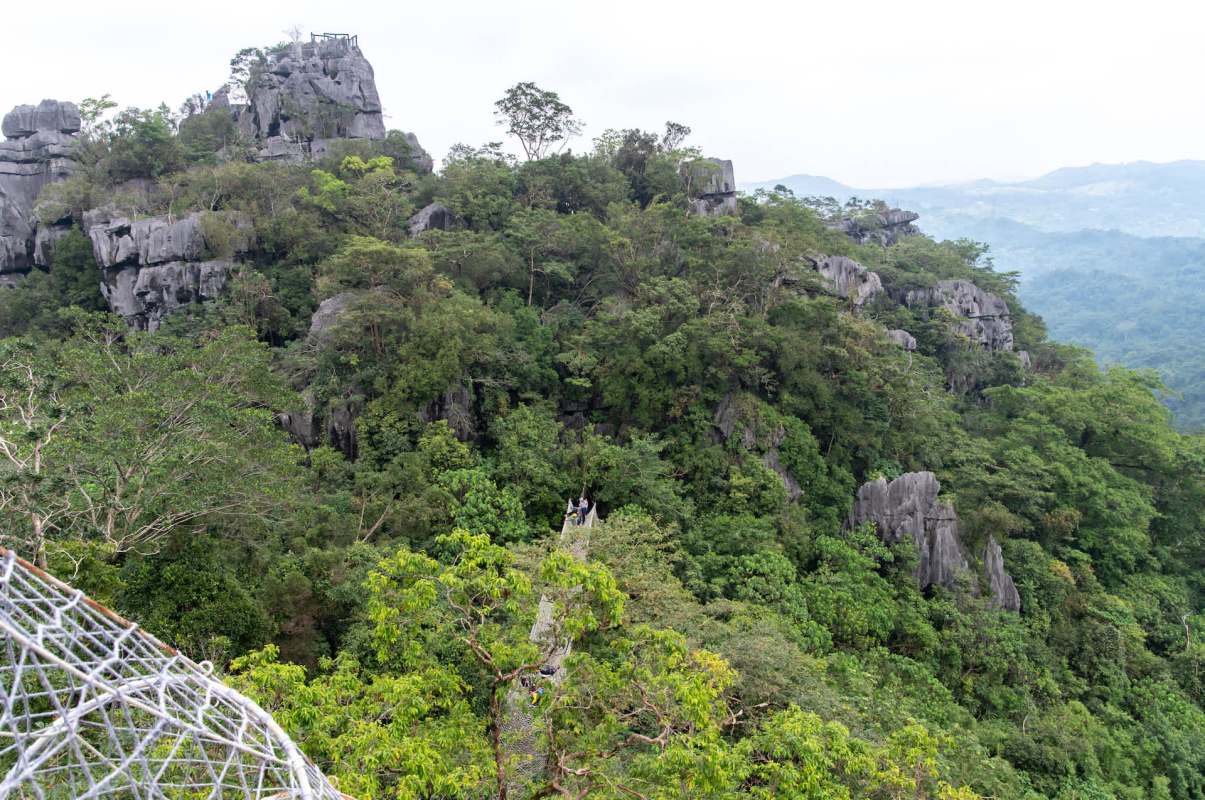
Scientists searching for snails in the Philippines have rediscovered a rare species of flora once thought to be extinct. According to Southeast Asian outlet ABS-CBN, a sighting of the tiny plant hadn't been recorded in over a century.
In 1895, botanist August Loher first discovered the rare Exacum loheri (H. Hara) Klack. Fast forward to 2025, and researchers from the University of the Philippines Diliman and the Philippine Normal University have published a study showing live photographs of the yellow and light purplish bloom found in the Masungi Georeserve.
The classification of Exacum loheri as a mycoheterotroph — meaning it relies on fungi, almost parasitically, instead of chlorophyll production for nutrients — makes it an interesting species to study. The rediscovery of the rare species adds to knowledge of the rich biodiversity protected within the 2,700-hectare rainforest reserve.
Masungi, located in the municipality of Baras, is home to over 400 plant and animal species. The identification of Exacum loheri within the reserve has now provided stakeholders with even more reason to protect the area from the potential for destructive activities, like raw material extraction, land speculation, and development of a controversial wind farm from Vena Energy — with many conservationists favoring renewable projects but not developed inside the reserve.
"Every year, science reveals more rare and endemic life thriving here — proof that this landscape is irreplaceable," Billie Dumaliang, the Masungi Georeserve Foundation's director for advocacy, said in a news release.
The small Masungi bloom isn't the only miracle of biodiversity stunning scientists. Amalophyllon miraculum is a purple-leafed plant recently rediscovered in an Ecuadorian area that has suffered nearly complete loss of existing biodiversity. The Millettia sacleuxii of eastern Tanzania, also thought to be extinct, now has a chance to thrive as researchers have germinated over 5,500 seedlings from pods found on surviving trees.
TCD Picks » Quince Spotlight
💡These best-sellers from Quince deliver affordable, sustainable luxury for all




If Exacum loheri and other rare flora can adapt and persist, there is continued hope for the survival of countless other species facing ongoing challenges.
|
Do you think America does a good job of protecting its natural beauty? Click your choice to see results and speak your mind. |
 Definitely 👍
💰Get TCD's free newsletters for easy tips to save more, waste less, and make smarter choices — and earn up to $5,000 toward clean upgrades in TCD's exclusive Rewards Club.







