


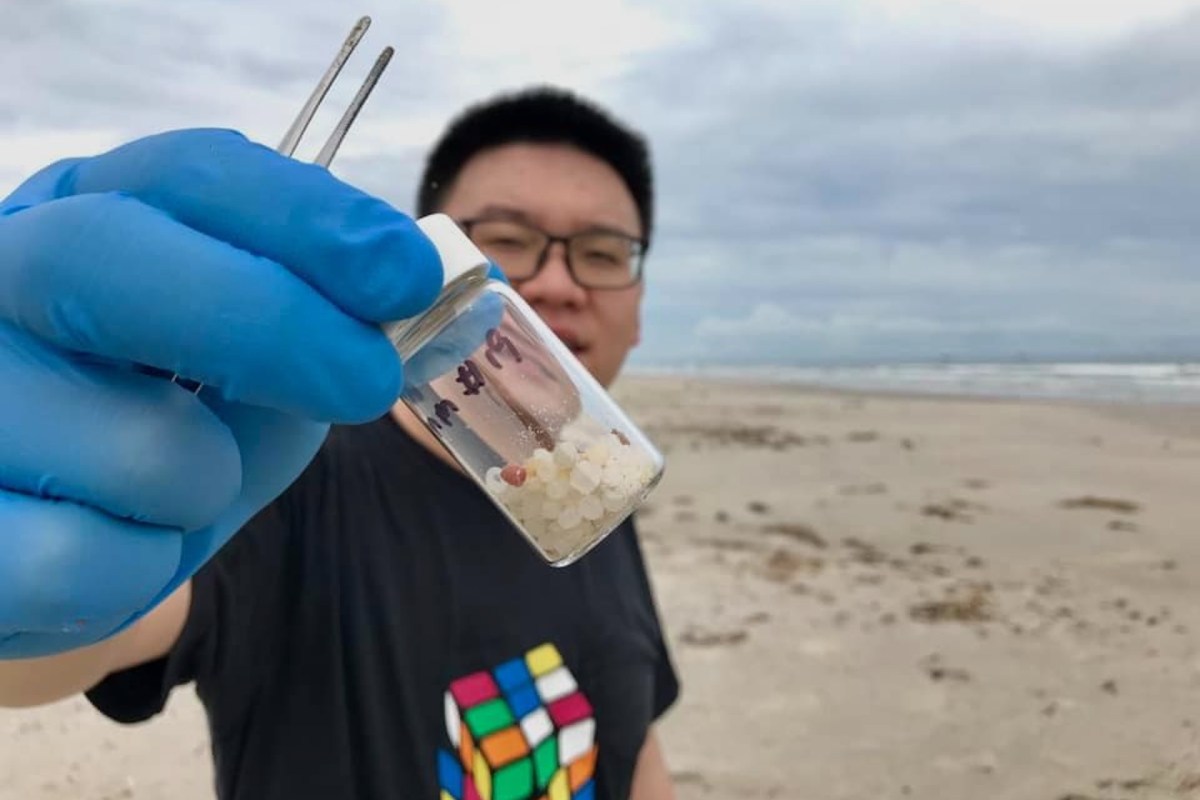
The University of Texas at Austin Department of Marine Science published an article explaining the results of scientific research on the source of nurdle pollution in Mexico.
"Identifying the source is the first step toward solving the problem," said Jordan Cisco, a graduate student at the University of Texas Marine Science Institute and lead author of the study.
What's happening?
Plastic pollution is a problem in oceans all over the world, and nurdles — tiny plastic pellets that are the raw material used in manufacturing plastic products — are a major source. The particles are described as being about the size of a lentil, and because they are so small and buoyant, they are very difficult to clean up. They are sometimes referred to as "mermaid tears."
The nurdles examined in the study were along the Texas and Mexico coastlines.
During the study, scientists discovered that they could trace the nurdles by modeling their movement, made easier by their buoyancy, using particle tracking systems.
The study involved over 700 samples to track the nurdles from Texas to the Yucatan Peninsula.
TCD Picks » Quince Spotlight
💡These best-sellers from Quince deliver affordable, sustainable luxury for all




Color changes and degradation allowed researchers to determine approximately how long the nurdles were in the water. It was found that they could travel several hundred miles over the course of several months.
The results of the study showed that in the western part of the Gulf of Mexico, nurdles likely originated from Texas.
Why is the movement of nurdles in the Gulf of Mexico important?
Nurdles and other forms of plastic pollution in our oceans can be ingested by marine animals and can negatively affect marine plants, causing detriment to biodiversity on the planet.
When researchers determine the sources of plastic pollution in the oceans, government policymakers can create useful and effective legislation to help prevent or at least limit plastic pollution.
|
How concerned are you about the plastic waste in our oceans? Click your choice to see results and speak your mind. |
 Extremely 😫
 This information can also help with cleanup methods and efforts.
What's being done about plastic pollution in the ocean?
The more research scientists can do about where plastic pollution in the ocean comes from, the better they can determine the best ways to mitigate it. One of the best ways to make an impact in our daily lives is to use less plastic.
Ongoing research in the Gulf of Mexico is looking at how plastic nurdles were fresher in Texas and more weathered in Mexico, which confirms the source and the southward movement. Scientists are also looking at models representing different seasonal and storm conditions to help better understand the route of the released nurdles.
This research can help mitigate plastic pollution in oceans around the world.
A hopeful Cisco stated in the University of Texas at Austin Department of Marine Science article that "This kind of source-tracking can be applied globally to help pinpoint pollution origins and inform cleanup strategies."

Join our free newsletter for good news and useful tips, and don't miss this cool list of easy ways to help yourself while helping the planet.







