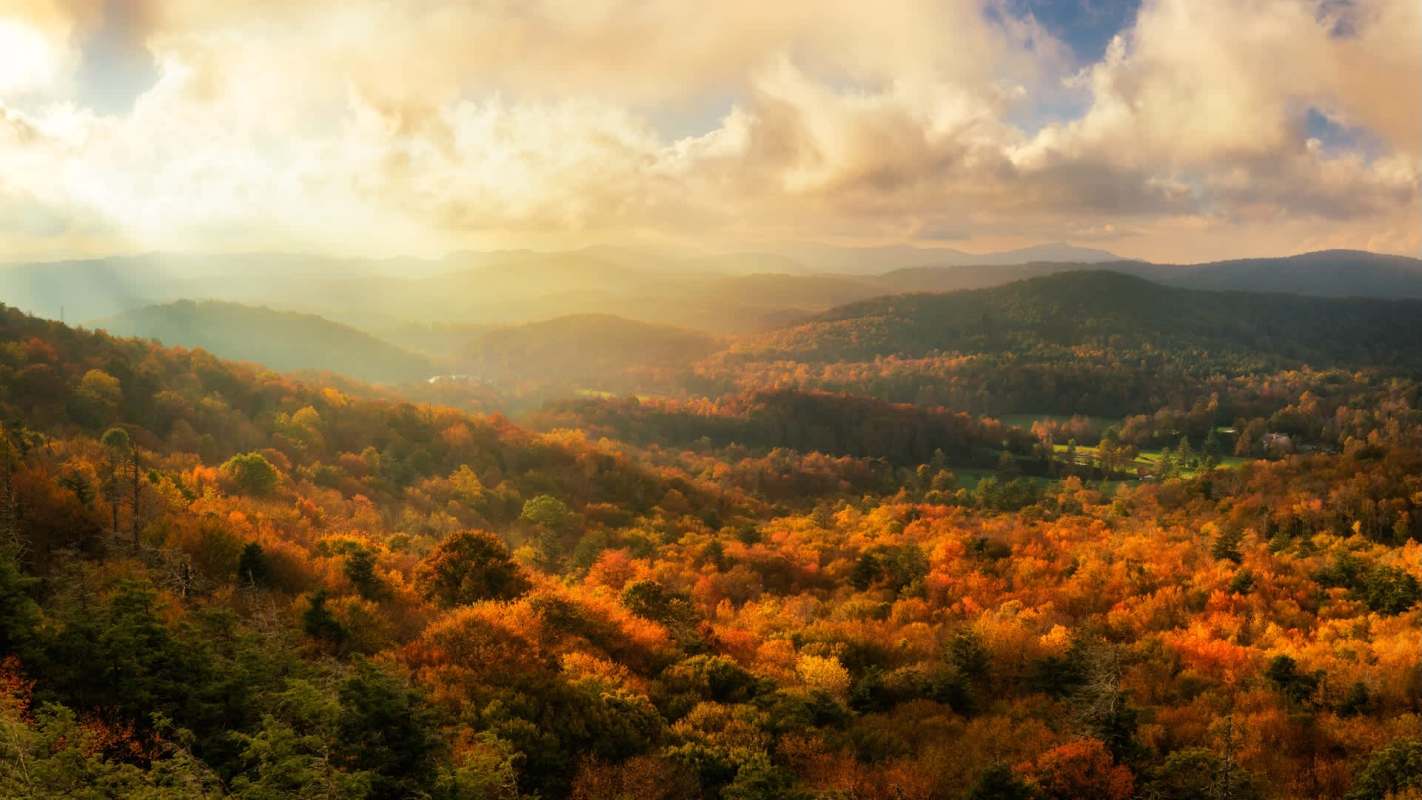
Fall colors are peaking across several northern states, as well as in the higher elevations of the Rockies and Appalachians. Scientists say our warming world is negatively impacting leaf peeping by influencing the timing and vibrancy of fall colors.
Western North Carolina typically draws large crowds of tourists during the fall, eager to witness the spectacular fall colors for which the state is renowned. According to a WRAL News report, the combination of a dry fall and warmer nights, fueled by an overheating planet, might mute fall colors this year.
The best ingredients for serving up a spectacular fall color show include warm, sunny days and cool, crisp nights. Heat-trapping gases that are building up in our planet's atmosphere have fueled a rise in nighttime fall temperatures. Those cool fall nights aren't as common as they used to be.
"We know the main reason we're seeing these warmer temperatures is human-caused climate change, pollution from burning coal, oil and gas," Shel Winkley, the weather and climate engagement specialist at Climate Central, told WRAL News. "In Raleigh, fall nights have warmed about 3 degrees in the past 50 years. To a tree waiting for that cool signal, that's a big deal."
Warming fall nights aren't just happening in North Carolina. As of 2022, Climate Central's analysis of fall nights for 245 U.S locations found that 97% of them had warmed since 1970. The average warming for these 212 cities had been 2.7 degrees Fahrenheit since 1970.
Adequate rainfall is also necessary to help trees produce the sugars that yield the bright purples, reds, yellows, and oranges that make for fantastic fall foliage. The September 23 U.S. Drought Monitor Report revealed that the area of North Carolina experiencing a moderate drought increased nearly fourfold from the previous week.
TCD Picks » Quince Spotlight
💡These best-sellers from Quince deliver affordable, sustainable luxury for all




"Drought and water stress can trigger earlier shedding of leaves," Climate Central researchers said. "Extreme drought and heat stress can cause leaves to shrivel before displaying their fall colors, dulling the seasonal color palette."
North Carolina is hoping for a boost to its tourism industry this fall as it draws leaf peepers from around the country who want a front-row seat to the Tar Heel State's annual fall foliage show. The tourism industry in Buncombe County, home to Asheville, was hit hard after Hurricane Helene brought devastation to western North Carolina last fall. The county lost an estimated $584 million during the fourth quarter of 2024.
Our warming world supercharged Hurricane Helene, like many extreme weather events. It was the deadliest U.S. hurricane since Hurricane Katrina in 2005. The storm was responsible for at least 250 deaths and nearly $78.7 billion in damages, according to a National Weather Service report.
Scientists with World Weather Attribution said Helene's rainfall was around 10% heavier, and rainfall totals from rain events that both preceded the storm and from the storm itself were made nearly 40% and 70% more likely by an overheating planet, respectively. The report also said that if Earth warms to 2 degrees Celsius above pre-industrial levels, extreme rainfall events like those from Helene could become 15% to 25% more likely.
|
Do you worry about the quality of the air inside your home?
Click your choice to see results and speak your mind. |
 Yes — often 😬
Join our free newsletter for good news and useful tips, and don't miss this cool list of easy ways to help yourself while helping the planet.