


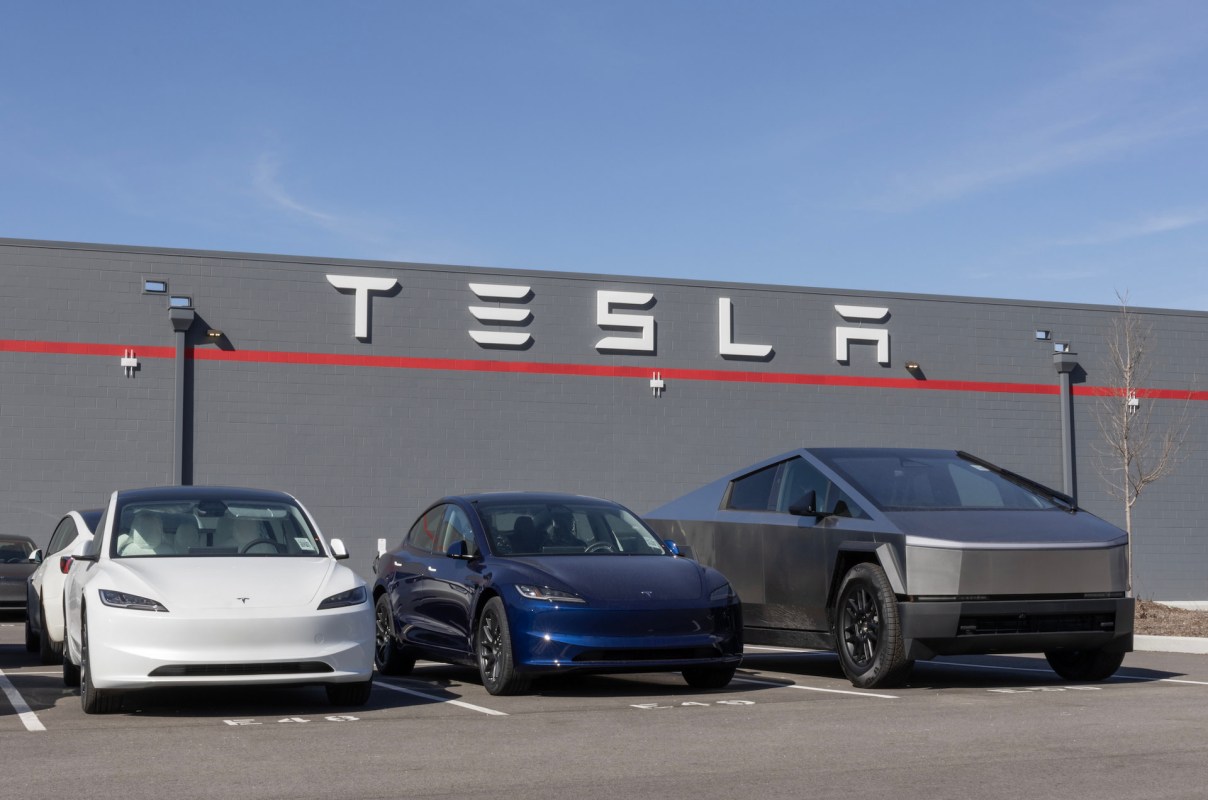
Amid a major rebranding effort and struggles with its image, Tesla saw its market share drop to a surprising low with federal tax credits for electric vehicles set to expire Sept. 30.
What's happening?
Cox Automotive exclusively shared data with Reuters that revealed Tesla's U.S. market share has dipped to its lowest level in nearly eight years at 38% — a far cry from the 80% share it once held.
This is the first time Tesla's share has fallen below 40% since 2017, when the Model 3 became its first mass-market car and inspired a greater number of consumers to switch to EVs.
"I know they're positioning themselves as a robotics, AI company. But when you're a car company, when you don't have new products, your share will start to decline," Stephanie Valdez Streaty, Cox's director of industry insights, told Reuters.
Why is this important?
While CEO Elon Musk has remained bullish on his robotics and AI aspirations, Tesla's talent exodus and Musk's history of overpromising and underdelivering have spooked investors.
Musk's political involvement also caused a segment of consumers to associate Tesla with Musk's personal views rather than the EVs, contributing to declining sales numbers. Other EV makers had already been attracting buyers away from Tesla, but they have also benefited from this upheaval, leaving Tesla with a smaller piece of the pie.
TCD Picks » Quince Spotlight
💡These best-sellers from Quince deliver affordable, sustainable luxury for all




What does this mean for the EV market?
Even though Tesla — whose name is synonymous with EVs — is facing reputational challenges, Cox's data showed that new EV sales leaped 24% month over month in July, per Reuters. The following month, as Tesla's growth lagged at 3.1%, the EV market grew by 14%.
Hyundai, Honda, Kia, and Toyota were key automakers turning up the heat on Tesla, offering more robust incentives to consumers scrambling to purchase EVs before October.
In addition to helping make cities healthier because they don't release tailpipe pollution, EVs offer long-term savings on energy and maintenance. This makes EVs attractive to consumers, regardless of their opinion about the brand largely responsible for making them mainstream.
"These legacy manufacturers are all benefiting from this sense of urgency, and they're able to have attractive offerings for their vehicles — and it's working," Streaty told Reuters. "I think we're going to continue to see this momentum through September."
|
Which of these factors is the biggest obstacle preventing you from getting solar panels? Click your choice to see results and speak your mind. |
 The upfront cost 💰
Join our free newsletter for good news and useful tips, and don't miss this cool list of easy ways to help yourself while helping the planet.






