


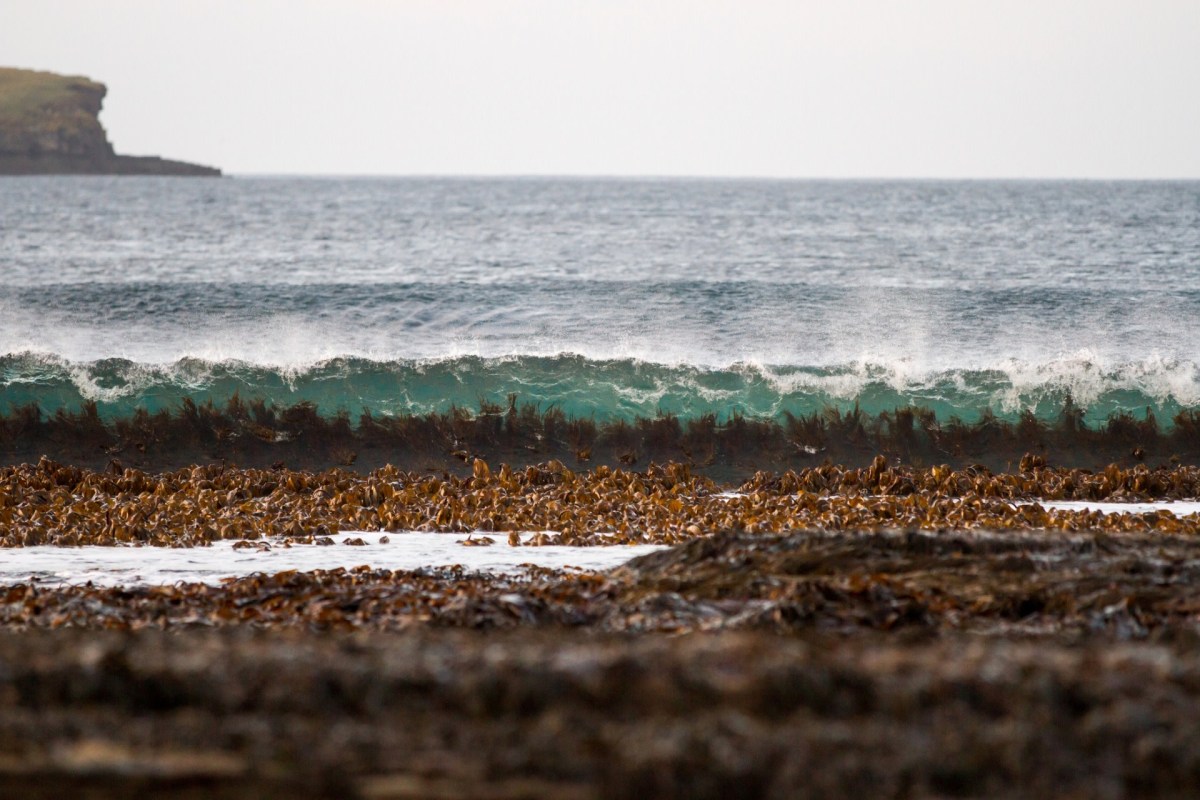
Coastal communities are facing stronger storms and rising seas that are eroding shorelines faster than ever before.
However, researchers in Scotland uncovered a surprising ally in this fight — one that's been swaying beneath the waves all along.
What's happening?
A team of scientists from Heriot-Watt University ran computer simulations to see how waves interact with underwater kelp forests off the shores of Scotland.
The results were striking — in some scenarios, dense kelp beds could knock down as much as 70% of a wave's energy before it reached the shore, giving vulnerable coastlines a natural shield against erosion and storm damage.
"Our report shows that habitats like kelp, seagrass, oyster reefs, and blue mussel beds could act as powerful buffers against storms," said professor Joanne Porter, based at Heriot-Watt's Orkney campus and co-author of the report. "But these ecosystems are also fragile."
This discovery comes at a time when many coastal areas are seeing storms grow more intense and destructive, supercharged by the planet-overheating pollution from burning dirty energy sources.
TCD Picks » Quince Spotlight
💡These best-sellers from Quince deliver affordable, sustainable luxury for all




That warming fuels sea level rise, leaving communities more exposed to flooding and erosion — a threat that scientists say is only getting worse.
Why is this important?
Around the world, erosion already costs billions of dollars each year in lost property, damaged infrastructure, and degraded ecosystems.
In Scotland, many small fishing villages and cultural heritage sites sit just yards from the water's edge, with little protection from incoming waves.
While extreme weather has always existed, scientists agree that human-driven warming is making storms stronger and more destructive.
|
Should we be harnessing the ocean to power our homes? Click your choice to see results and speak your mind. |
 Absolutely 👍
 The loss of natural defenses — including mangroves, seagrass meadows, and now, potential kelp forests — leaves coastlines more vulnerable than ever.
What's being done about it?
The new research suggests kelp restoration could be a game changer for coastal protection.
In Scotland, projects like Seawilding are working to restore seagrass and native oysters, while international efforts — such as The Nature Conservancy's coastal resilience programs — are protecting marine habitats that act as storm buffers.
Everyday actions can also help — reducing reliance on fossil fuels, supporting sustainable seafood choices, and backing marine conservation policies all reduce stress on kelp habitats.
Protecting kelp forests could not only preserve marine biodiversity but also give coastal communities a powerful, low-cost shield against the storms of tomorrow — turning an underwater wonder into a front-line defender.

Join our free newsletter for good news and useful tips, and don't miss this cool list of easy ways to help yourself while helping the planet.







