


Energy Star, the Environmental Protection Agency program identifiable by the small blue logo with a star on many American appliances, may be terminated.
The program began in 1992 as a way for manufacturers to indicate their products' energy efficiency. As the Trump administration seeks to terminate the program, UCLA professor Magali A. Delmas noted in The Conversation that Energy Star saves consumers around $15 billion per year while costing only $32 million in taxes to manage.
What's happening?
In early May, the Trump administration announced its plan to end the Energy Star program, per The Washington Post.
CBS reported that the administration believes that energy regulations increase costs for manufacturers and energy providers — and, by extension, consumers.
TCD Picks » Induction Cooking
💡Discover the induction option that’s just right for your needs and your home



While this may make the product more expensive to purchase, the lifetime savings are often well worth it. According to Energy Star's 2024 Reference Guide, Energy Star-rated products can be anywhere from 10% to 50% more energy-efficient than their counterparts.
Delmas wrote in her article for The Conversation: "Energy Star stands out as a rare example of a practical, nonpartisan program that delivers real benefits."
Why is energy efficiency important?
Using energy efficiently ensures a minimal impact on the environment and lower costs for consumers.
Items that consume a lot of energy can be taxing on the power grid, especially if it is powered through burning dirty energy sources like coal or oil.
Save $10,000 on solar panels without even sharing your phone number Want to go solar but not sure who to trust? EnergySage has your back with free and transparent quotes from fully vetted providers in your area. To get started, just answer a few questions about your home — no phone number required. Within a day or two, EnergySage will email you the best options for your needs, and their expert advisers can help you compare quotes and pick a winner. Solar panels can save you more than $50k over their 25-year lifespan, and EnergySage can help you save as much as $10k on installation. Which begs the question — isn't that worth an email or two? |

For example, an appliance like a stove can have varying energy efficiency among products. While gas stoves can have unintended health consequences from burning gas in the home, including respiratory illnesses, they can also be less efficient than an induction stove.
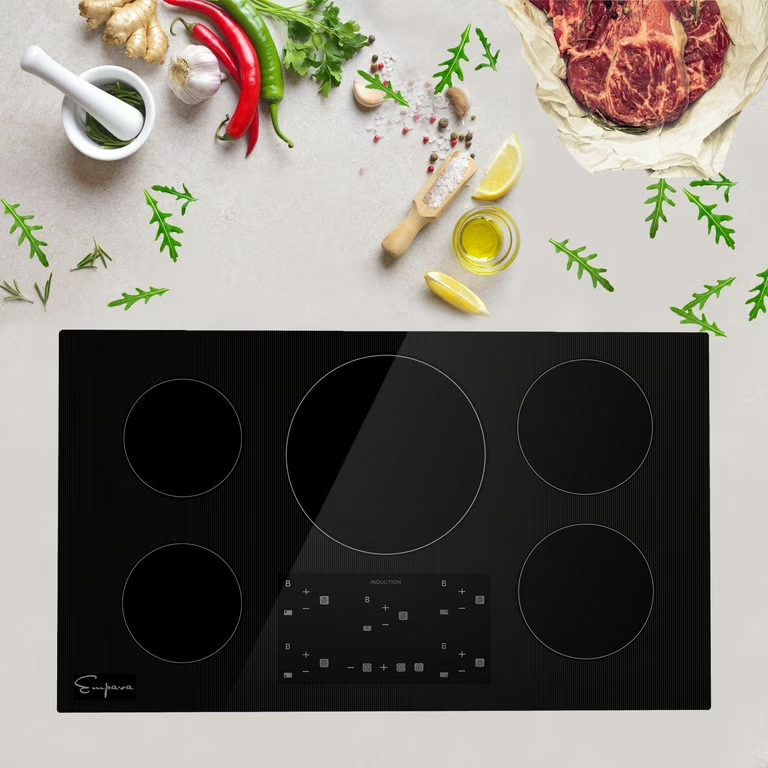
Induction stoves work by electromagnetically heating the cookware itself instead of the stovetop. They save time and energy because they heat faster than gas stoves.
|
Should the government continue to give tax incentives for energy-efficient home upgrades? Click your choice to see results and speak your mind. |
 Absolutely 💯
 Consumers can also save up to $840 on an induction stove thanks to the Inflation Reduction Act's incentives. However, the IRA is also under threat of removal, much like Energy Star. These incentives are better taken advantage of sooner rather than later.
You can also get a relatively cheap plug-in induction burner (starting at $50) if you are renting or do not want to commit to a full induction stove before trying it out.
What's being done about Energy Star?
Multiple news outlets report that Energy Star is in danger of being terminated, but a conclusive decision has not been made yet.
Environmental Defense Fund Director Ted Kelly said: "The Energy Star program … provides significant benefits for shoppers, manufacturers, and our environment. America gains nothing, and loses a lot, by getting rid of it."

Join our free newsletter for good news and useful tips, and don't miss this cool list of easy ways to help yourself while helping the planet.







