


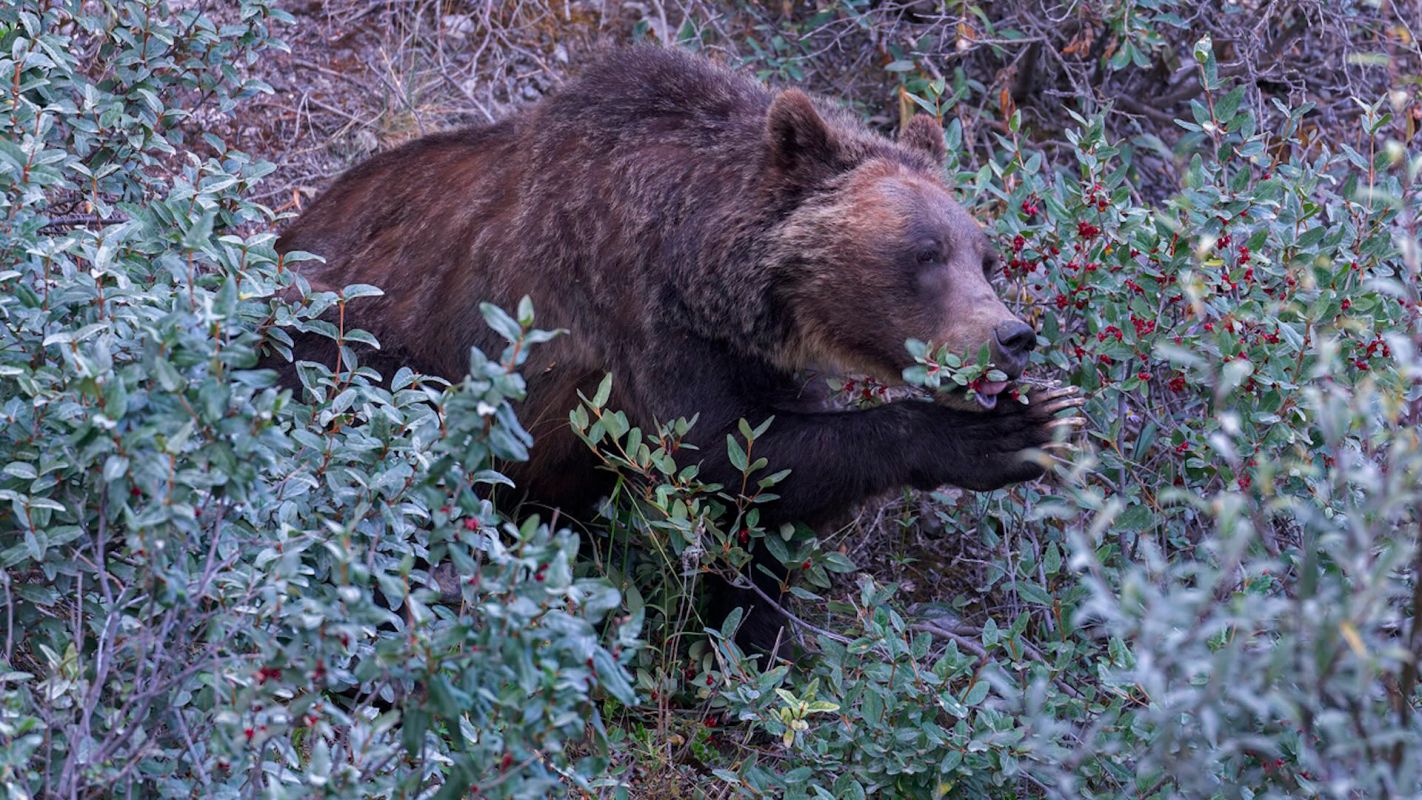
A new study from the University of British Columbia's Vancouver and Okanagan campuses has deepened our understanding of the relationship between bears and the huckleberries they eat, as detailed in a report shared by Phys.org.
Huckleberries are one of the many foods bears enjoy, and they are a critical source of energy when they're in season in the late summer.
Now, researchers have evidence that the beneficial relationship goes both ways.
"Bears don't just eat huckleberries — they help them grow in new places," said lead researcher Aza Fynley Kuijt, of UBC's Faculty of Forestry.
It works like this: Bears eat huckleberries, which contain seeds they can't digest. After the bears eat, they travel around, ranging as much as about 4.3 miles away from the original plants. They leave droppings in some of the places they visit, and those droppings contain the undigested seeds — which means that new huckleberry plants can start growing miles from their parent plant. That's much farther than the seeds would spread without the bear's help.
Being able to scatter their seeds over a wide area is important for the huckleberry plant population, which needs to find new places to grow. It's especially vital with the world getting warmer since areas that were once perfect for this species are now too hot, and areas that were once too cold are now just right.
TCD Picks » Quince Spotlight
💡These best-sellers from Quince deliver affordable, sustainable luxury for all




Not only do bears help huckleberries spread to new areas, but they actually help the seeds sprout. Researchers tested seeds from bear droppings against seeds inside whole huckleberries to see which would have more success at sprouting. The seeds from the bears sprouted up to 28.5% of the time, while the seeds that hadn't gone through a digestive system only had a 0.2% success rate. That's because substances in the berry flesh inhibit the seeds' growth — but the bear's digestion strips those away, leaving the seeds free to grow.
"Our findings show that this mutual relationship is crucial for both species, especially as climate change shifts suitable habitats for huckleberries," said Kuijt.
This two-way relationship between an animal and its food is typical in nature, where a complicated web of these connections helps keep the whole ecosystem in balance. Understanding and protecting these relationships can make or break whole regions, affecting an incredible array of species in the process.
|
Which of the following sustainable changes would make you most likely to choose a particular airline?
Click your choice to see results and speak your mind. |
 Using cleaner fuel ⛽
 "Wildlife conservation is not just about protecting certain species, but about looking after ecological processes and relationships. As we show here, looking after grizzly bears and movement corridors can also help huckleberries, which people and bears both adore," said Clayton Lamb, a UBC Okanagan biologist who co-authored the study.

Join our free newsletter for good news and useful tips, and don't miss this cool list of easy ways to help yourself while helping the planet.







