


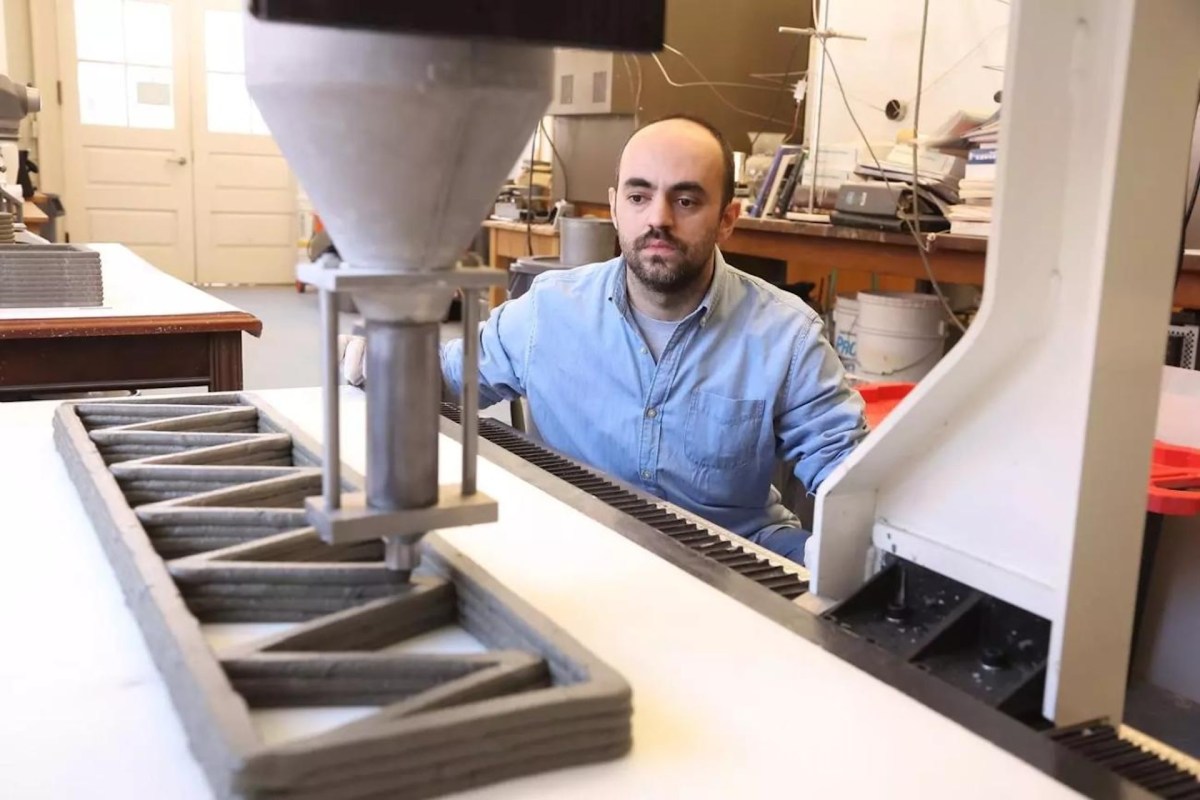
Researchers at the University of Virginia School of Engineering and Applied Science have been testing a plant-based additive to concrete that is 3D-printable and could improve structural strength.
The material is called cellulose nanofibrils (CNF), and initial studies have shown that just 0.3% of it in a cement mixture results in a smooth flow for printing with fewer air bubbles, improving structural strength, as Interesting Engineering reported.
"The improvements we saw on both printability and mechanical measures suggest that incorporating cellulose nanofibrils in commercial printable materials could lead to more resilient and eco-friendly construction practices sooner rather than later," according to Osman E. Ozbulut, a professor in the Department of Civil and Environmental Engineering, per the report.
The use of 3D printing in building construction continues to be explored, as it can frequently rely on recycled materials, is more time- and cost-effective than traditional methods, and allows for highly customizable designs.
While the cement and concrete industry is responsible for 8% of global planet-warming pollution, according to the Princeton Student Climate Initiative, natural and sustainable additives like CNF can help produce more resilient structures that can endure the test of time, as Interesting Engineering put it.
The government-funded Advanced Building Construction Initiative has also been looking at ways that additives can improve things like thermal efficiency while using 3D printing in construction.
TCD Picks » Quince Spotlight
💡These best-sellers from Quince deliver affordable, sustainable luxury for all




"In additive manufacturing the opportunities are unlimited. Our interdisciplinary team is exploring ways to print reinforced concrete walls that are strong and more energy efficient, without additional first costs and potentially reducing material use," according to Ashley P. Thrall, principal investigator of the Notre Dame project.
Another project has gone a step further and is working with biomass "ink" derived from agricultural waste to 3D print building materials. Cellulose helps make that product stronger as well, along with fungi and bacteria.
Natural materials are also being employed in traditional bricks, helping sequester carbon and reduce planet-warming gas pollution from the construction industry. But novel plant-based 3D-printing methods continue to show promise for the environment.
"Today, a lot of trial and error goes into designing mixtures," as Ozbulut shared in a press release. "We're addressing the need for more good science to better understand the effects of different additives to improve the performance of 3D-printed structures."
The findings from Ozbulut's study will be included in the September 2024 issue of Cement and Concrete Composites.

Join our free newsletter for weekly updates on the latest innovations improving our lives and shaping our future, and don't miss this cool list of easy ways to help yourself while helping the planet.






