


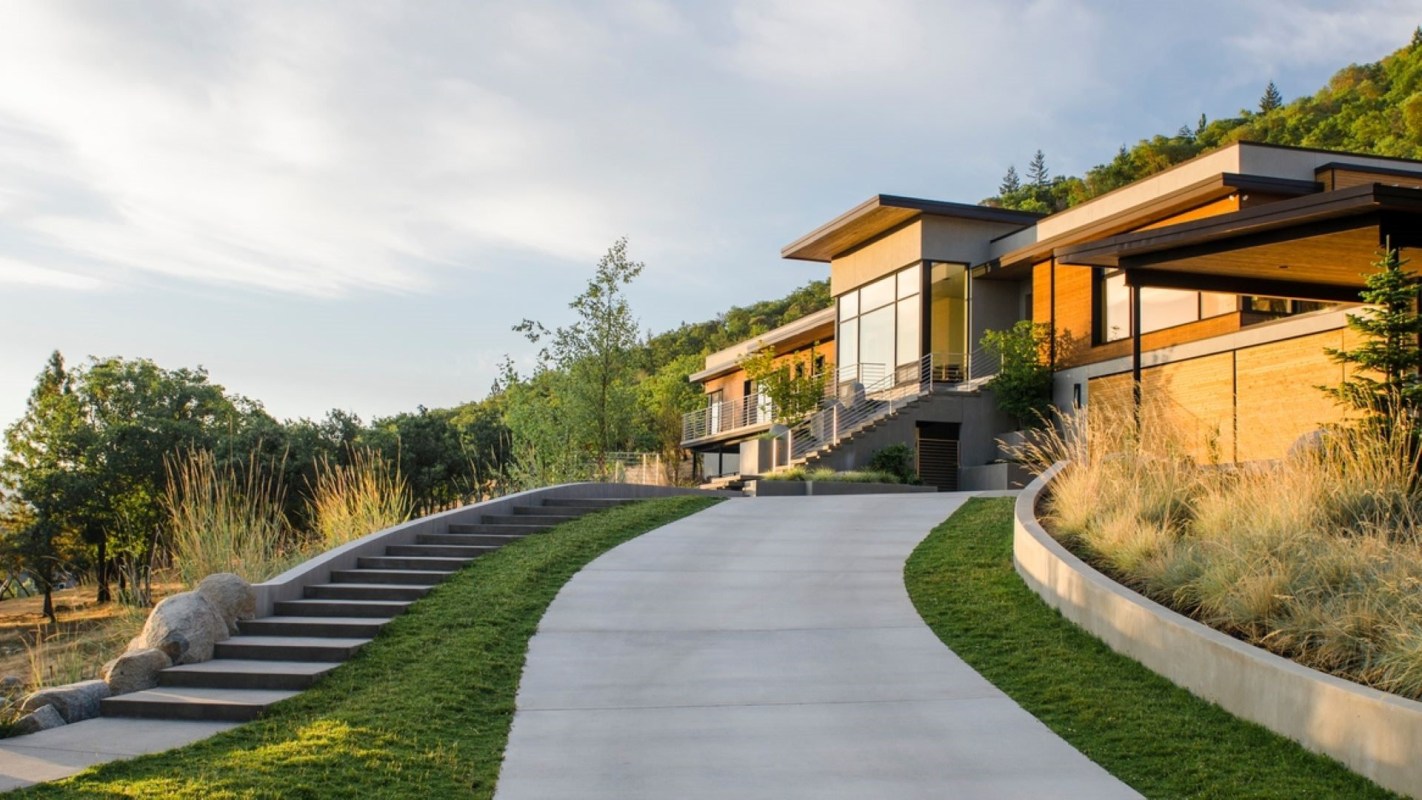
One green home in Oregon is expected to be four to five times as efficient as other comparable sized abodes thanks to some smart planning.
Architect Jan Fillinger of Green Hammer designed the LEED-H Platinum-certified custom luxury home, which utilizes structural insulated panels, triple-pane Unilux windows, and a Zehnder heat recovery ventilation system. Plus, special sensors on all of the electrical outlets notify the residents of energy usage so they can adjust their consumption accordingly.
The house's design also conserves water and minimizes exposure to airborne toxins and pollutants. Meanwhile, all the lumber used in the structure and framing was Forest Stewardship Council certified.
Cube-shaped south-facing homes are ideal when designed with passive principles, according to Planitree. However, this particular dwelling is rectangular with a north-facing orientation off of a steep slope, which made the design team's accomplishment all the more spectacular.
"In many ways, due to the complexity of the site and the house's orientation, the challenges we overcame on energy efficiency have helped pave the way and raise the bar for these types of advanced homes, and will serve as a ground-breaking example for energy-efficient design and build for the region," Green Hammer CEO Stephen Aiguier said, per Planitree.
This type of sustainable home design helps save homeowners money on energy and water costs.
TCD Picks » Quince Spotlight
💡These best-sellers from Quince deliver affordable, sustainable luxury for all




Plus, reducing our reliance on dirty energy sources, which are driving the overheating of our planet, can help us avert some of the most serious outcomes of rising global temperatures, such as more heat waves and droughts, increased spread of diseases, and more frequent and severe storms.
Thankfully, examples of more eco-conscious homes are popping up across the globe. For instance, one green home built within a national park in England uses 110% less energy than a traditional house, according to one design group. Another low-impact home in Colorado blends into the local forest while even sending energy back to the grid.

Join our free newsletter for weekly updates on the coolest innovations improving our lives and saving our planet.






