


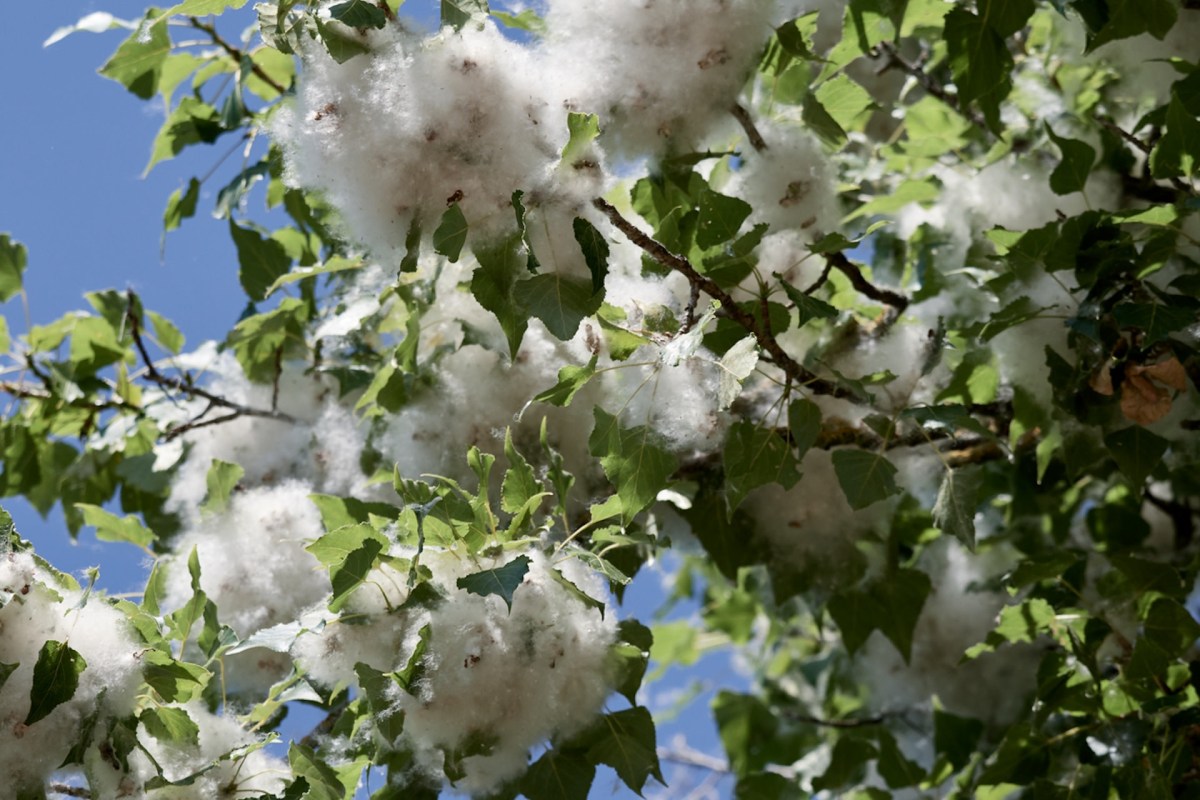
The powerful substance that surrounds pollen is being studied at the University of Florida with the hope of unlocking the secret to its durability.
If the Gator scientists can replicate the near-destructive, protective shell called sporopollenin, it could become a breakthrough for capturing and storing air pollution underground.
The secret is empowering plant roots by replicating the shielding.
Pollen protection is crucial for the "vulnerable" plant particles. Unlocking the chemical structure of the substance has been so far as tough as the sporopollenin itself, the journal Nature reported.
"They call sporopollenin the 'plant diamond' because you can't destroy it," genetics Professor and study lead Matias Kirst said in the university lab report. "This has made it incredibly difficult to study in the past."
Plants naturally remove air pollution from our atmosphere and provide many other benefits. But when they decompose, the dirty air is released back into the environment.
TCD Picks » Quince Spotlight
💡These best-sellers from Quince deliver affordable, sustainable luxury for all




Kirst's team wants to turn root systems into iron men of sorts, boosted with the indestructible armor of sporopollenin. The experts claim the substance would provide a way for the roots to hold air pollution safely underground indefinitely, per the research.
"The idea behind using sporopollenin is that now you create a permanent storage for that carbon — that carbon is not going back to the atmosphere," Kirst said in a story on the research by Phys.org.
The work is backed for three years by a $1.7 million grant from the U.S. Department of Energy's Earthshots program, designed to bring to fruition projects that will provide for a cleaner future.
It is in the early stages now, focusing on poplar trees. The scientists are examining the pollen shielding on the genetic level to determine how to reproduce the protection in root systems, as the university report describes the process. Sporopollenin is typically only made when plant flowers make pollen.
"If applied to trees and crops widely grown, this approach would take us close to achieving the carbon dioxide removal needed to combat climate change," Kirst said in the lab summary.
Carbon capture — storing air pollution safely underground — is a technology garnering huge investments around the world. Trees and other vegetation provide natural filters. An odd concept that has earned more than a billion dollars in government funding vacuums pollution from the air, pumping it underground for storage.
Now, Kirst and the team in Florida plan to supercharge plant roots for long-term, reliable dirty air containment.
"If plants could hold this ability to store carbon in the roots, then when those plants die, that carbon is stored in the soil forever," he said in the university's story.

Join our free newsletter for weekly updates on the coolest innovations improving our lives and saving our planet.






