


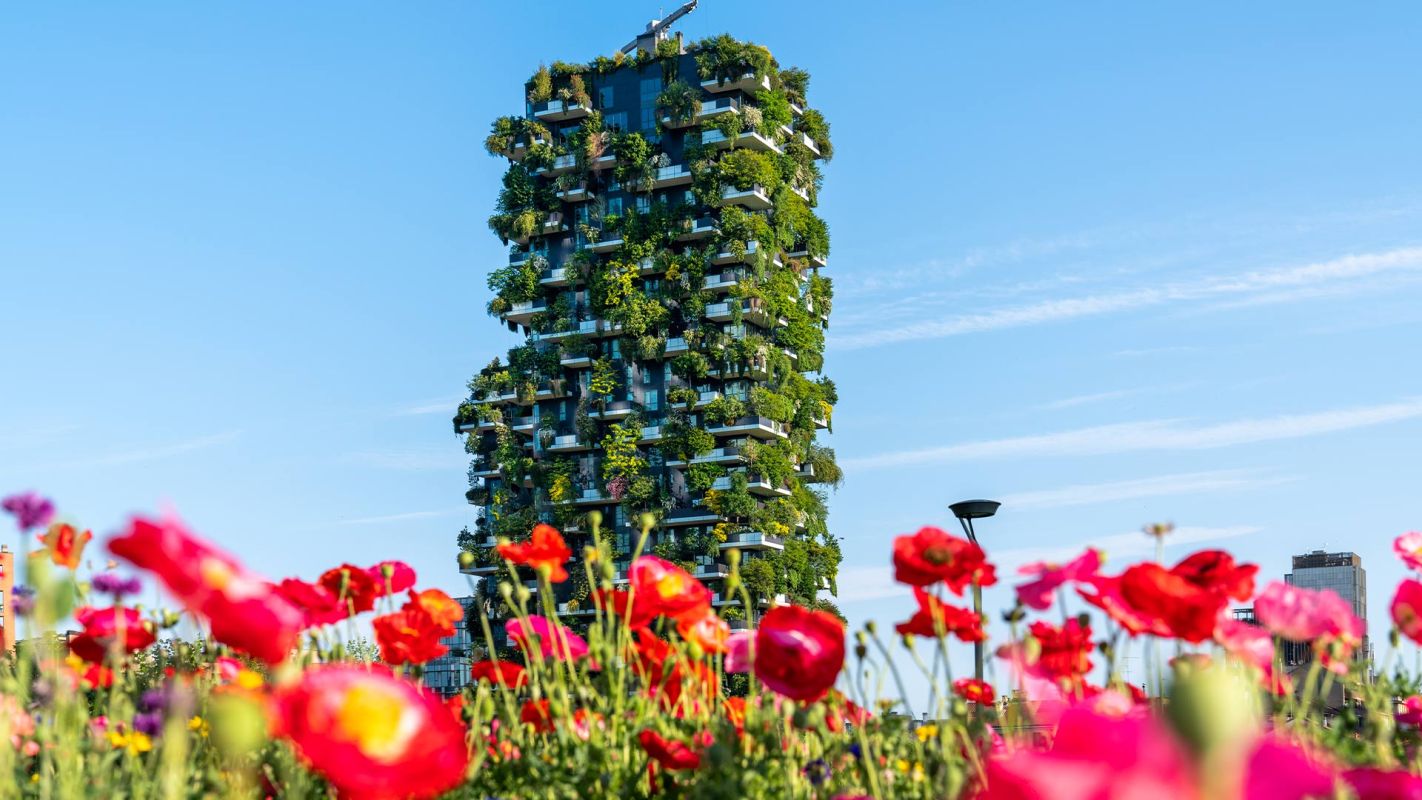
If you live in a concrete jungle and your houseplants and succulents just aren't cutting it anymore, then how does a home equipped with 21,000 trees and shrubs sound? Milan's Bosco Verticale, or Vertical Forest, is as much an apartment building as it is a feat of architectural biodiversity that illuminates the relationship between humans and nature.

The Vertical Forest's unique green design serves to repopulate native species, absorb air pollution, and highlight human ingenuity in a way that allows people to live with the Earth instead of in opposition to it.
Designed by the Italian architect and urban planner Stefano Boeri, these lush towers house 800 diverse types of trees and more than 5,000 shrubs, as well as humans. The greenery provides 30,000 square meters' worth of vegetation on only 3,000 square meters of urban surface.
The towers' staggered and overhanging balconies also allow the growth of larger trees, which can grow over three floors tall.

Even wildlife loves the buildings' lush foliage; many animal species thrive here, including around 1,600 species of birds and butterflies.
Now you may be wondering, who is tending to these lush gardens? Who trims the overgrowth and takes care of this living building?
TCD Picks » Quince Spotlight
💡These best-sellers from Quince deliver affordable, sustainable luxury for all




Flying gardeners, of course.
The Flying Gardeners are a specialized team of arborist-climbers who use mountaineering techniques to descend from the roofs to maintain, prune, and replant the vegetation. And since irrigation is centralized, the plants can be monitored remotely and watered only as needed.
The Bosco Verticale (Vertical Forest) has become a bright symbol for Milan at a time when efforts to slow Earth's overheating have taken on a dire importance.

According to United Nations Habitat, cities consume 78% of the world's energy and produce more than 60% of planet-overheating greenhouse gas pollution, yet they occupy less than 2% of the Earth's surface.
Forests and the rest of Earth's land-based ecosystems can absorb, approximately, 30% of carbon pollution that comes from humans, Inside Climate News reports. While this is a good amount, it still falls short of what's needed to drastically reduce the amount of carbon pollution we create.
By bringing additional forests directly to cities, Boeri hopes to make urban centers a major part of the effort to cool the planet, by cleverly turning harmful carbon pollution into fertilizer that helps the buildings' foliage flourish.
If these award-winning buildings are a glimpse into the future of city living, then show us where to sign already!
Follow The Cool Down on Instagram and subscribe to our newsletter.






